
Reports suggest the $4 billion Panasonic EV battery plant won by Kansas four years ago in competition with the state of Oklahoma isn’t living up to its promises of creating 8,000 jobs.
A report by the Kansas Informer indicated that so far, only about 1,400 employees are working at the plant near Kansas City. When Kansas used financial incentives to attract the Panasonic Energy plant after the company narrowed its choice to Kansas and Oklahoma, it was hailed by Kansas Gov. Laura Kelly.
“As the largest private investment in Kansas history and one of the largest EV battery manufacturing plants of its kind in the country, this project will be transformative for our state’s economy,” touted Kelly. The deal promised 8,000 high-quality jobs that would “help more Kansans create better lives for themselves and their children,” the governor said.
“Winning this project has shown that Kansas has what it takes to compete on a global scale,” the Governor said, “and that our pro-business climate is driving the technological innovation needed to achieve a more prosperous and sustainable future.”
But the Kansas Informer reports, “—the results so far haven’t been what the original promises suggested.
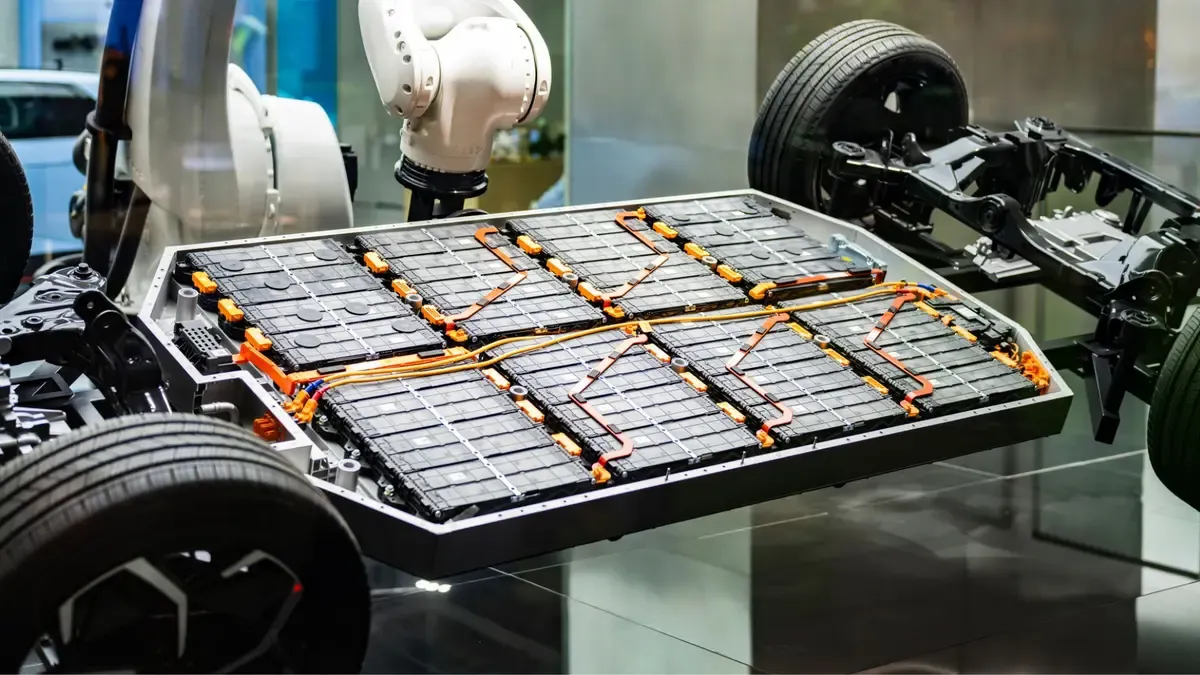
The plant produces lithium-ion batteries for electric vehicles and opened formal production last year.
The early projections were sweeping—thousands of jobs, rapid construction timelines and ripple effects that would extend well beyond Johnson County. A few years later, the projects are real. But the results so far haven’t been what the original promises suggested. And its employment numbers apparently were affected by a new administration at the White House which hasn’t promoted Green Energy projects as much as the Biden administration.
As a result, “That demand has not materialized as quickly as expected. In fact, sales of EVs has cooled to the point Ford all but halted production of its 2025 F-150 Lightning,” according to the Informer.
It is reported the Panasonic plant is only at half of its capacity. The company had originally intended for full production and employment to happen by 2027.
As the Informer explained, “The slowdown reflects broader changes in the electric vehicle market. After several years of rapid growth, EV sales in general have cooled. Analysts with Cox Automotive have reported that while EV sales continue to rise, the pace has slowed significantly compared with the surge seen earlier in the decade. Electric vehicles still account for less than 10 percent of U.S. auto sales, and automakers have begun scaling back production targets or delaying new models.”