

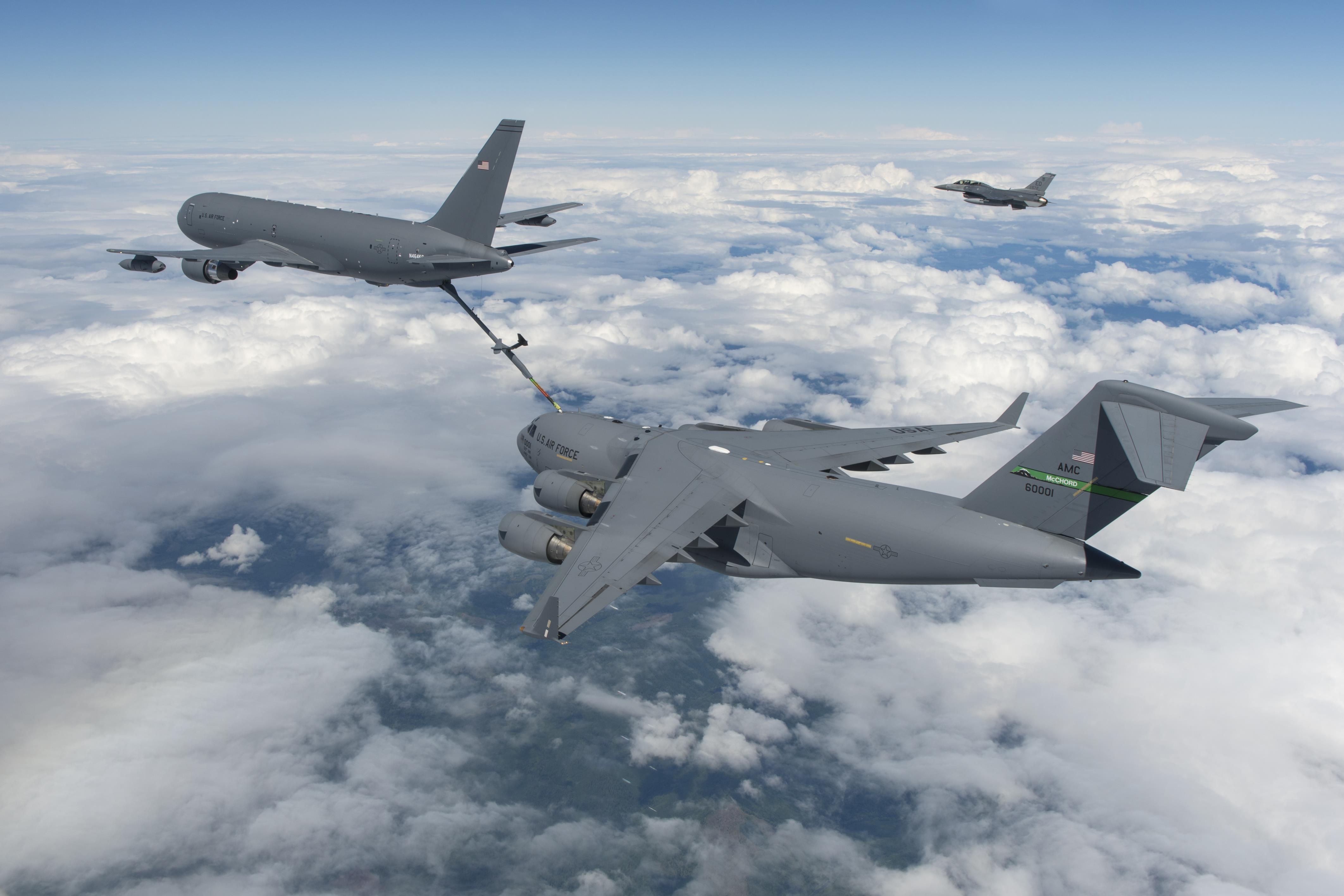
This week’s announcement that the U.S. Air Force plans to add to its fleet of KC-46 refueling tankers will likely assure the existence of Altus Air Force Base in southwest Oklahoma and more support for Tinker Air Force base as well.
The Air Force said it plans to field 263 of the tankers to fully replace the aging KC-135 fleet. The KC-46 refueling banker program was originally expected to result in 179 aircraft, reported AviationWeek.com.
Its importance in the ongoing war with Iran was highlighted by leaders because of their importance in keeping fighters and bombers refueled as they pounded military sites. While they weren’t KC-46s, three KC-135 refueling tankers were destroyed or badly damaged last month when they were hit by Iranian drone and missile attacks as the planes sat on the tarmac at Prince Sultan Air Base in Saudi Arabia. The destruction and damage affected U.S. air power projection.
Altus Air Force base is the primary training center for KC-46A Pegasus pilots and the plane’s boom operators. Drivers in western Oklahoma routinely see the lumbering planes flying low over the landscape as they approach Altus Air Force base where the 97th Air Mobility Wing operates simulators and has specialized training facilities to quality aircrew on the giant tanker.
Refueling tanker training is also conducted at McConnell AFB in Wichita, Kansas and Travis AFB in California. But the primary training falls on Altus AFB.
“The KC-46 is planned to fully replace the Air Force’s KC-135 fleet, providing critical refueling capabilities to project power, maintain strategic deterrence, and defend the Homeland,” the Air Force says in a statement.
The KC-46 refueling tanker is not cheap. Documents show each plan costs about $199.8 million but the cost is expected to soar to $321.9 million by 2028.
The tanker has not yet reached a full-rate production decision as it undergoes a long-awaited upgrade to its remote vision system. The Air Force is also modifying its boom to address a long-standing deficiency impacting its ability to top-up slow-flying aircraft like the A-10. Budget documents say fixes will be installed starting in fiscal 2028, reported AviationWeek.Com.