

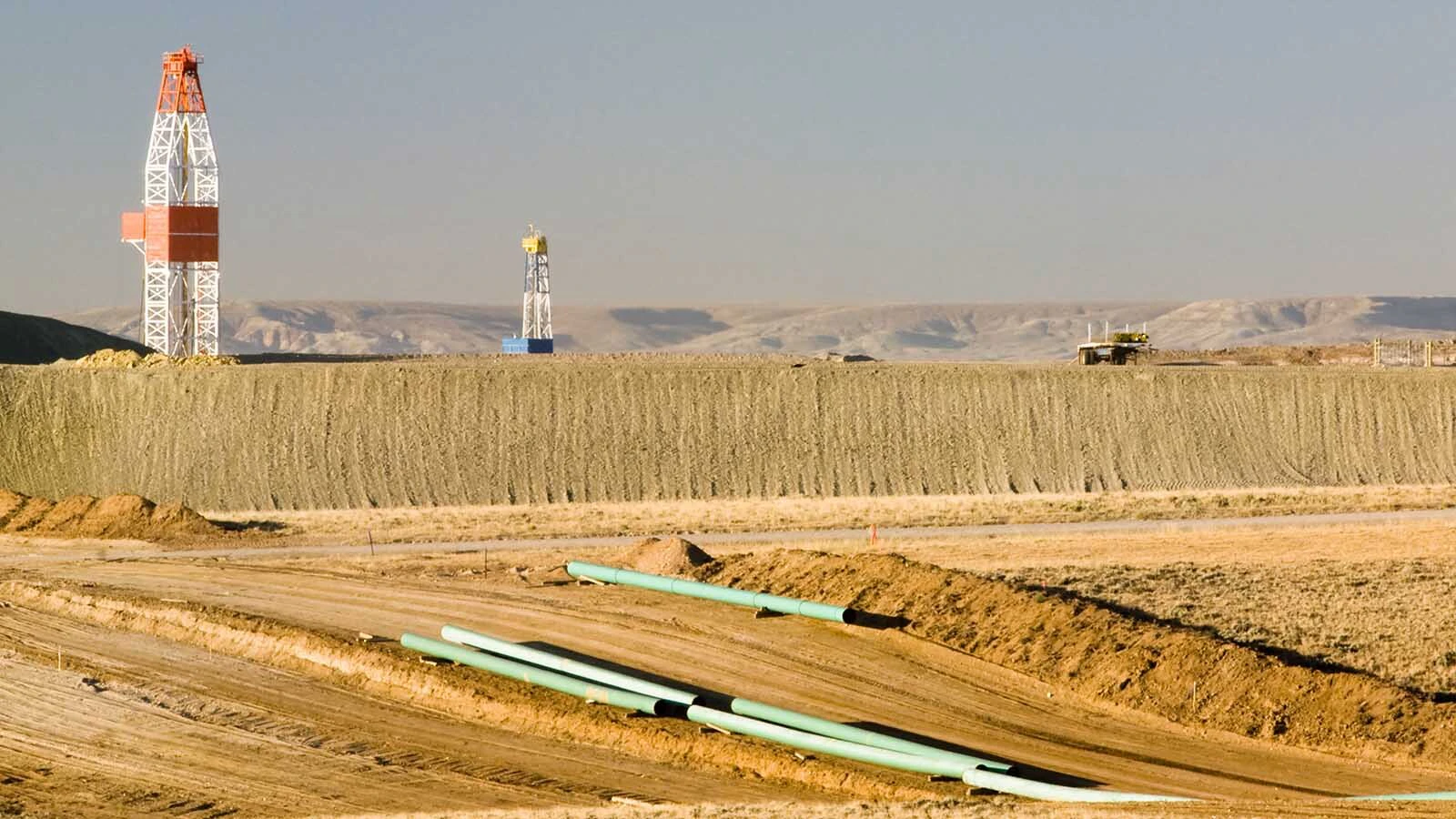
(Jim Parkin via Alamy)
The Bridger Pipeline, the one approved last week by President Trump, is filling up quickly. At least commitments from oil suppliers have been made and the line hasn’t even been built.
As reported by Cowboy State Daily in Wyoming, the $1 billion pipeline project has received commitments totaling 400,000 barrels of crude oil a day. It translates to about 89% of the 450,000 barrels per day volume the company has said it needs to green-light construction of the 650-mile pipeline, and 72% of its initial overall proposed volume, 550,000 barrels per day. The pipeline can scale to more than 1 million barrels per day.
The line would terminate in Guernsey, Wyoming, site of large regional storage capacity. Tallgrass Energy is among the companies with major storage and other pipelines converge there as well carrying oil from Canada, the Bakken in North Dakota and Montana and Wyoming’s Powder River Basin.
The Daily went on to indicate that according to a Reuters report, the firms with commitments to take advantage of the new line are all from Canada—Cenovus Energy, Canadian Natural Resources, Tamarack Valley, Whitecamp Resources, and Strathcona Resources.
Once the line from Canada to Guernsey, Wyoming is complete, it will result in more crude oil to be sent to the Cushing Hub in northern Oklahoma and eventually transported southward to the Gulf Coast refineries.
Gov. Mark Gordon told Cowboy State Daily the fact Bridger pipeline is already almost “full” is itself proof of the need and desire for this kind of infrastructure in Wyoming and the nation.
“Guernsey is such a great location to be able to go to nationwide,” Gordon said. “And people in Wyoming are energy sophisticates in a lot of ways. So, they understand how pipelines work and what happens, and this is a good route.
“It makes sense to me that people would say, ‘I like it,’ and, ‘Let’s get this done.’”
The project still faces a review in the form of a federal environmental impact statement. It also must obtain state and local permits. But it also faces threats of lawsuits and legal attempts to block it by environmentalists and a coalition of other opponents.