

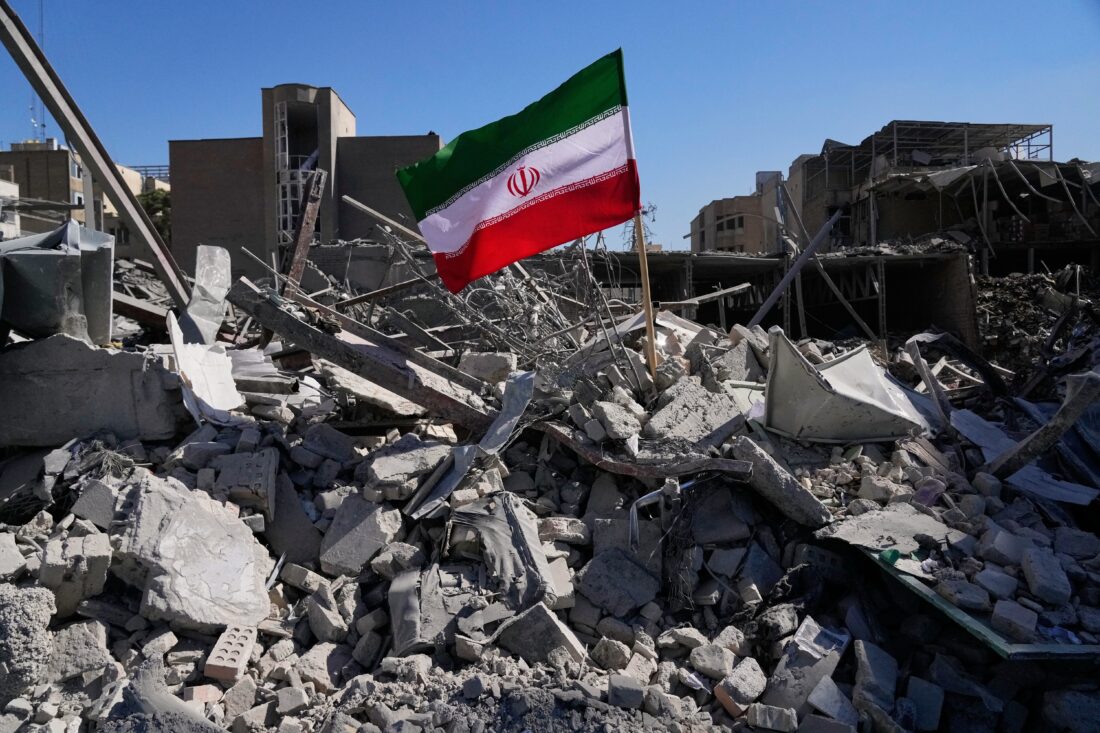
Iran has reportedly rejected a new ceasefire proposal with the U.S. even after President Trump said he would target power plants and bridges Tuesday night—-and as a result, crude oil prices rose on Monday after jumping to session highs.
West Texas Intermediate, still higher than Brent because U.S. crude has become prized oil supply in the absence of free flows from the Middle East, finished up $1.17 or 1.05% and closed at $112.70 per barrel on the New York Mercantile Exchange.
Brent crude rose 1.2% and finished at $110.42 a barrel.
Oil prices jumped to session highs on Monday, after President Donald Trump said Iran “could be taken out” on Tuesday night.
WTI Midland is being offered for July delivery in north Asia at premiums of between $30 and $40 per barrel, depending on the benchmark against which they are marked, trading sources told Reuters on Monday.
A few more India-flagged tankers carrying LPG managed to make it through the Strait of Hormuz as Iran is allowing selective traffic in the vital energy flow chokepoint.
Gas prices barely moved on Monday, inching upward to $2.802 MMBtu with a $0.002 gain or 0.07%.
Gasoline and diesel fuel prices are still high in the wake of the war. The national gas average us $4.11, 12 cents higher than a week ago while the national diesel fuel average is 20 cents higher at $5.61 per gallon.
Oklahoma’s average gasoline price is $3.27 up two cents in the past week while diesel fuel is $4.62, or 14 cents higher. The average gas price in Oklahoma City is $3.23 down five cents over the past week while Tulsa’s average is $3.21, down two cents.
Driving to the West Coast? Expect shockingly high prices in California where 11 counties have averages of higher than $6 a gallon. One county average is $6.72 per gallon. Washington state’s average is $5.38 while Nevada averages $5 per gallon
Oklahoma energy stocks responded to the day’s trading with mostly moderate to slight gains.