

Duration of War on Iran Key in Rising Oil Prices
The war against Iran did one thing this week—send crude oil prices climbing. Prices in the U.S. rose to nearly $73 a barrel after closing Friday, prior to the launching of the attacks by Israel and the U.S., at $67 a barrel.
How much higher could they climb?
“Impossible to predict,” answered Dr. Steven Agree, an Oklahoma City University economist specializing in energy policy and banking, told OK Energy Today on Monday. West Texas Intermediate crude, considered the U.S. benchmark, rose nearly 6% by Monday afternoon. Brent crude, the global standard, was up 10%. And some analysts were still forecasting a rise closer to or exceeding $100 a barrel if the Strait of Hormuz faces a prolonged outage, reported OilPrice.com.
Strait of Hormuz a Critical Flashpoint
President Trump and U.S. military leaders say the attacks could continue for perhaps a month.
“That’s the key,” said Agee, “how long it’s going to last. And if something happens negatively in the Strait of Hormuz, prices will definitely go up for gasoline, diesel fuel and jet fuel. It’s the critical question.”
The fighting certainly has disrupted the global energy supply chain. Traders are putting their money down that the supply of oil from Iran and across the Middle East will slow or even come to a stop. The ability of some of the countries to export oil to the rest of the world by using the Strait of Hormuz, the narrow mouth of the Persian Gulf, has already been affected by Iranian attacks.
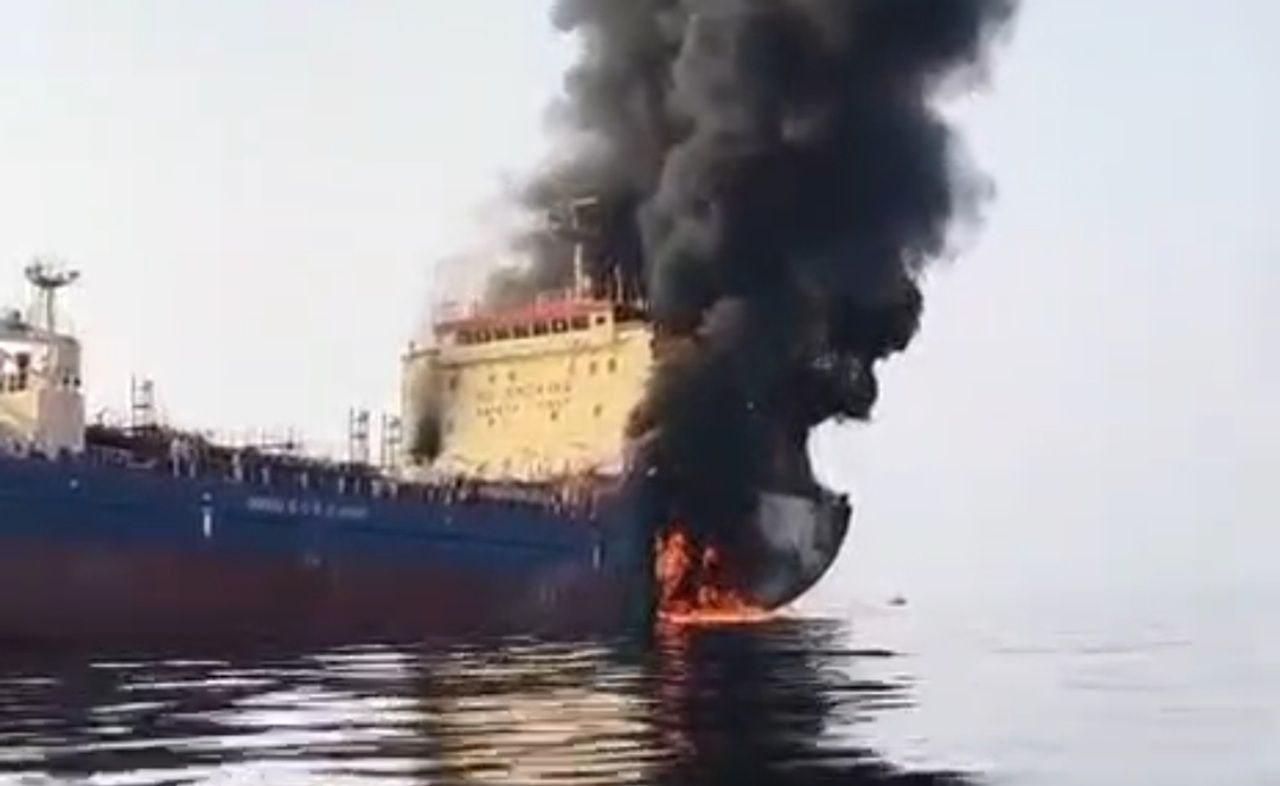
At least three oil tankers were struck and thick, black smoke billowed from a ship as described on cellphone footage released on social media.
Amid the turmoil, Reuters analysis of data from the MarineTraffic website said at least 150 ships, including many oil and gas tankers, had dropped anchor. As shipping appeared to be grinding to a halt, there were conflicting reports about whether Iran had declared the strait closed, reported OilPrice.com.
Oil Prices Move Hour to Hour
“It’s an hour-to-hour basis,” said Dr. Agee. “Oil prices could go up 3, 4, 5 or 6 dollars a barrel.”
The duration of the conflict, combined with any sustained disruption to shipping lanes, remains central to price forecasts. The Strait of Hormuz handles roughly one-fifth of the world’s petroleum liquids consumption, making it one of the most strategically important energy chokepoints globally.
If they do, Oklahoma producers will definitely see the economic impact.
“It depends on the point of sale,” he explained. “But producers will be paid more in the next 60 days when the increased prices kick in.”
The evolving military situation, shipping traffic patterns, and global commodity markets are now closely intertwined, with traders, refiners, and producers watching developments in the Middle East on a near real-time basis.