

U.S. Electricity Generation Reaches Record in 2025 as Power Demand Climbs
Demand for electricity in the United States continued to climb in 2025, pushing total U.S. power generation to a new record level, according to newly released federal data.
Figures from the Monthly Energy Review, issued by the U.S. Energy Information Administration (EIA), show that rising demand from homes, businesses, manufacturing facilities and data centers helped drive overall electricity generation higher last year.
The data reflects growing energy consumption across several sectors of the economy as the United States continues to see increased industrial activity, digital infrastructure expansion and residential power use.
U.S. Electricity Net Generation Hits Record Level
Power demands grew to record last year.
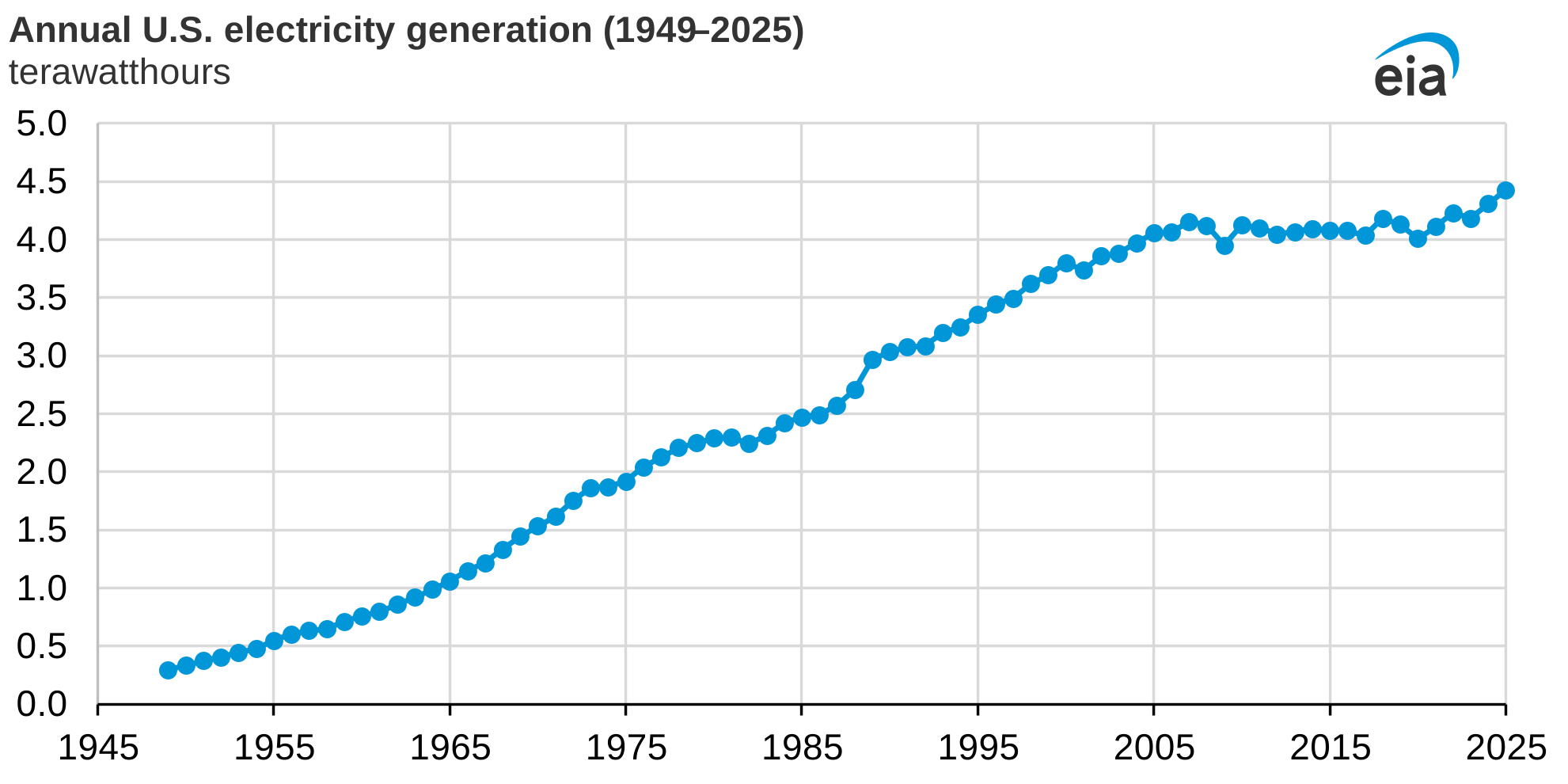
U.S. electricity net generation reached a record in 2025 based on data from the Monthly Energy Review issued by the U.S. Energy Information Administration.
In 2025, the United States generated 4.43 terawatthours (TWh) of electricity, up 2.8% from 2024 generation, which previously had been the highest annual total in the EIA’s Electricity Data Browser dataset dating back to 1949.
Growth Follows Years of Relatively Flat Electricity Output
This growth contrasts with the trend of relatively flat electricity generation in the United States between the mid-2000s and early 2020s.
Net generation is related to electricity demand, and federal energy analysts note that several economic sectors are contributing to the increase in consumption.
Much of the recent growth in electricity demand comes from the commercial sector, which includes data centers, and the industrial sector, which includes manufacturing establishments.
The rapid expansion of digital infrastructure, cloud computing facilities and artificial intelligence processing centers has increasingly placed new demand on the nation’s power grid, particularly in regions experiencing rapid data center development.
Retail Electricity Sales Increased Across All Sectors
In 2025, U.S. retail sales of electricity to ultimate customers, which is a key indicator of demand, increased compared with 2024 in all three sectors: residential (by 10%), commercial (by 4%), and industrial (by 1%).
Retail electricity sales reflect the amount of power delivered to end users, including homes, businesses, and industrial operations, and are widely used by analysts as a primary measure of electricity consumption trends.
The increase across all three sectors indicates broad growth in power usage nationwide, reinforcing federal data showing rising electricity demand tied to economic activity and expanding digital infrastructure.