
EIA refines estimates for Permian tight oil and shale gas production
A change in the way the U.S. measures oil and gas production in the Permian Basin, the most prolific shale area in the country, shows production was still incredibly rich and high.
A new update from the U.S. Energy Information Administration showed the Basin still produced 44% of the oil U.S. oil production in December 2025 and 19% of the nation’s total marketed gas production.
As the EIA reported, it added the Avalon, Barnett, Dean, and Woodford plays within the Permian Basin to our estimates by formation for Permian tight oil and shale natural gas production in our March 2026 Short-Term Energy Outlook (STEO). The Permian formations already included the Spraberry, Bone Spring, and Wolfcamp plays. EIA periodically reviews and updates our play designations according to the latest interpretation of geologic information in identifying crude oil and natural gas production from tight oil and shale formations. At the same time, the EIA researchers removed the Delaware and Yeso-Glorieta plays. These modifications are isolated to the Permian formations, resulting in a net increase for tight oil production by 0.2 million barrels per day (b/d) and shale gas production by 0.8 billion cubic feet per day (Bcf/d) for 2025, compared with previous estimates.
With this update, the shale and tight formations within the Permian Basin produced 6.0 million b/d of crude oil (44% of total U.S. oil production) and 22.2 Bcf/d of dry natural gas (19% of total U.S. marketed gas production) in December 2025.
It measured tight oil and shale gas production two different ways in the STEO: by major geologic formations (STEO Table 10b) and by geography (STEO Tables 4a and 5a). These two methods lead to differences in our estimates because surface-level activity does not distinguish between formations, which can overlap each other like layers of a cake and have differing geographical boundaries. In contrast to the Permian formations, the geographic Permian region produced 6.7 million b/d of crude oil and 29.1 Bcf/d of marketed natural gas in December 2025.
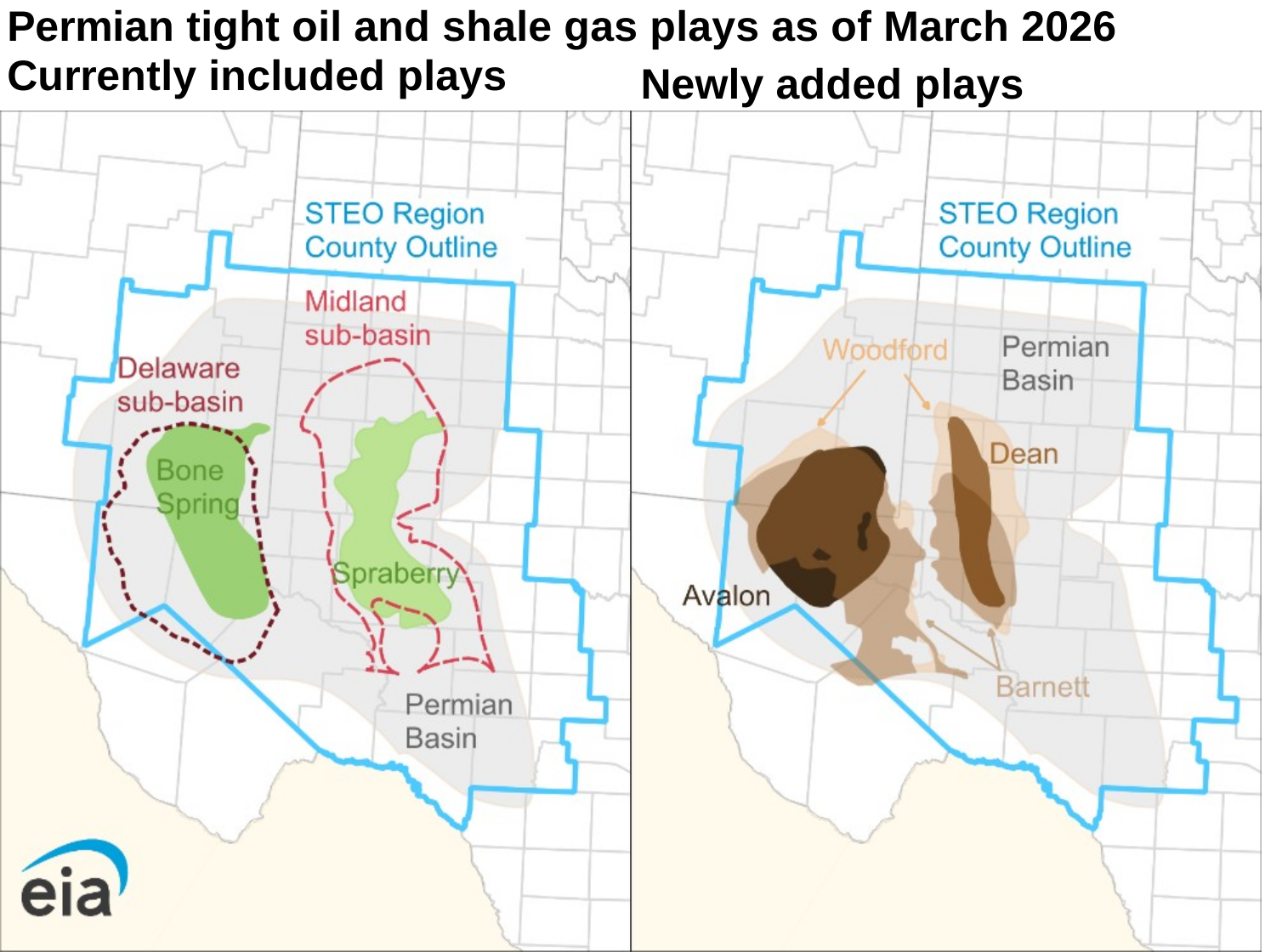
Note: The Wolfcamp play is located throughout the Delaware and Midland sub-basins.
The Bone Spring, Spraberry, and Wolfcamp plays continue to underpin most crude oil and natural gas production in the Permian, and together they are the largest oil producing shale and tight formations in the country, accounting for a combined 5.7 million b/d and 20.8 Bcf/d in December 2025. In the EIA’s latest review of available geologic information, it determined that the Delaware and Yeso-Glorieta plays were conventional in nature. The removal of the Delaware and Yeso-Glorieta plays accounted for a reduction of 0.1 million b/d and 0.3 Bcf/d in the estimate of production from the geologic Permian and was more than offset overall by the addition of the new plays. The estimate for the Permian geographic area did not change.
The United States Geological Survey (USGS) released reports on the Avalon, the Barnett, and the Woodford plays located within the Permian Basin. The USGS reports identify these plays as continuous accumulations, a category that includes shale and tight formations and is commonly referred to as unconventional. Although USGS has not yet released a geologic report on the Dean (sometimes referred to as the Wolfberry), the EIA also included it because it is a relatively thin formation—nearly indistinguishable from its continuous accumulation neighbors—located vertically between the Spraberry and Wolfcamp plays.
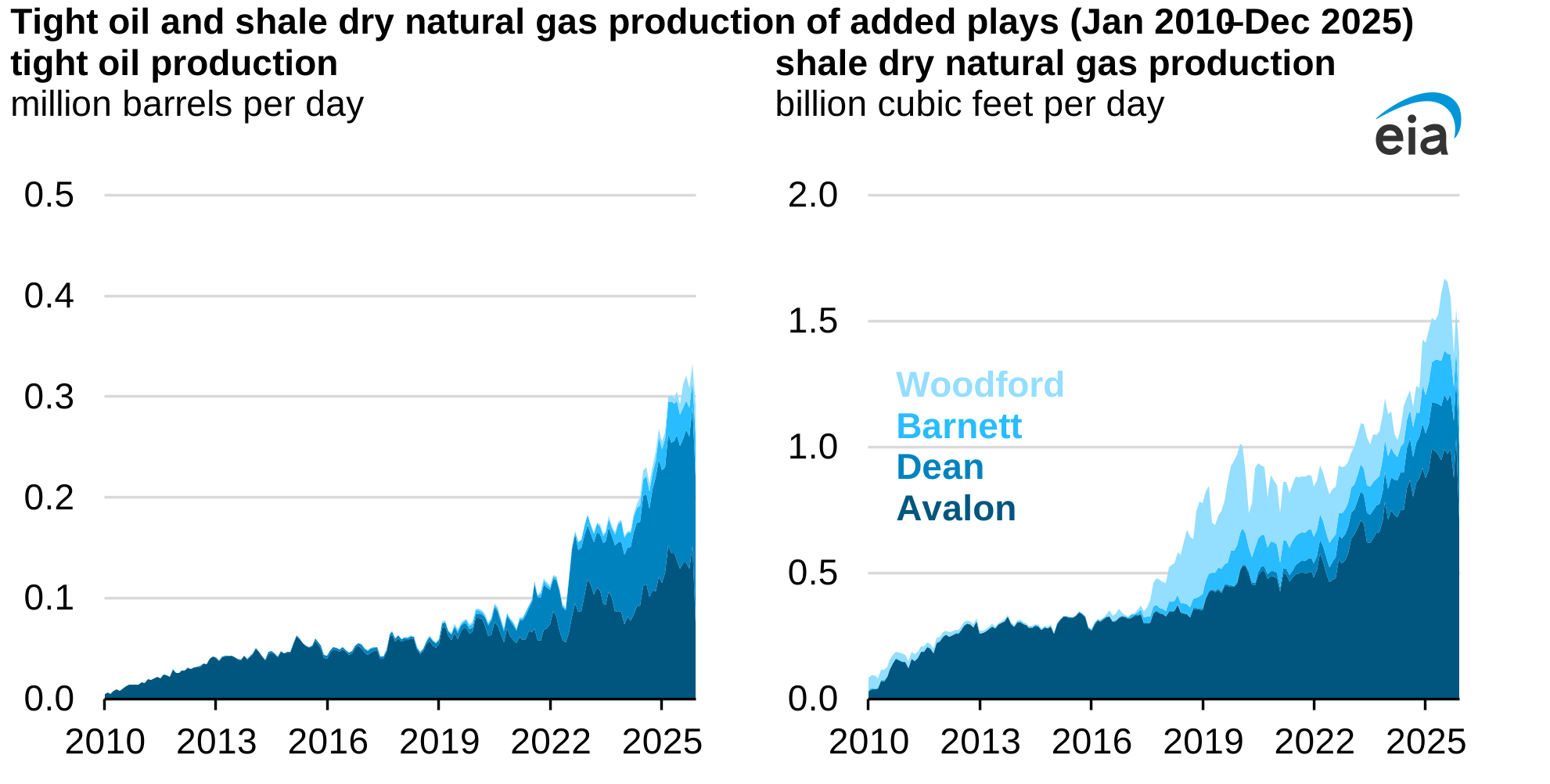
Although the four newly added plays account for approximately 5% of Permian production, recent increases in drilling activity and production growth in the plays have been significant. Compared with 2022, these plays combined have more than doubled (+0.2 million b/d) oil production and increased natural gas production by 72% (+0.6 Bcf/d) in 2025.