
Oklahoma Comprehensive Water Plan – What You Need to Know
A state water plan has been unveiled by the Oklahoma Water Resources Board and it identified challenges facing the state.
“Oklahoma faces combined pressures of aging assets, growing demand, compliance issues with public health regulations & attracting a qualified workforce,” according to the Oklahoma Comprehensive Water Plan (OCWP).
The study found that Oklahoma faces combined pressures of aging assets, growing demand compliance with public health regulations and attracting a qualified workforce.
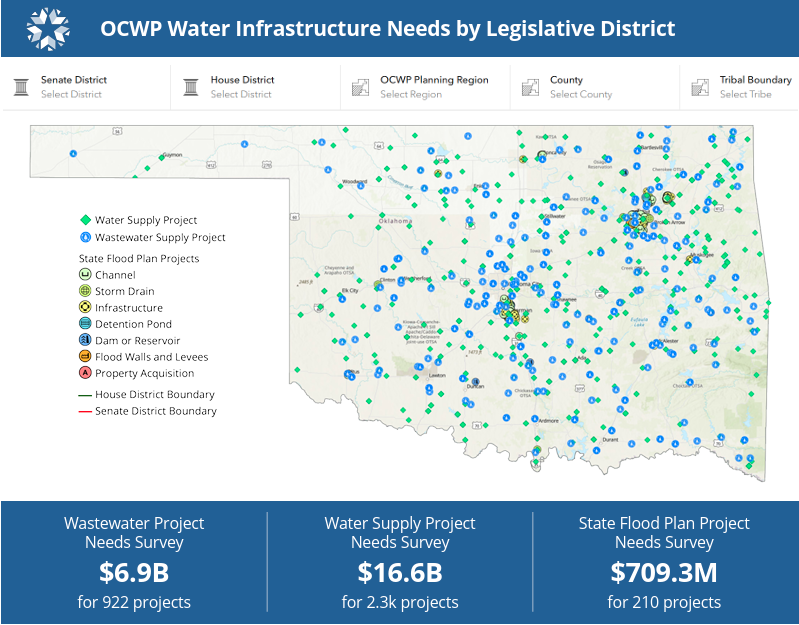
“The OCWP identified $24 billion in immediate need to keep Oklahoma ahead of the curve in mitigating these issues,” warned the plan.
The report said the greatest obstacle is funding, high upfront costs for engineering services, difficulty in securing the required local match and escalating labor and material expenses. It explained that those challenges often stall projects, leaving essential upgrades out of reach.
Of Oklahoma’s 82 planning basins, the Water Resources Board estimated that by 2075, more than half will experience serious water gaps.
It also said there is a great need for what it called Comprehensive Stream Gauging.
“Oklahoma’s water management is jeopardized by
a lack of investment in the state’s stream gauging
network. This crucial gauge data is necessary for
flood forecasting, drought preparedness, water
allocation and permitting, and interstate river
compact compliance. With over half of the state’s
stream systems unmonitored, Oklahoma needs to
invest in stream gauging now to restore capacity and
enable science-based decision making.”
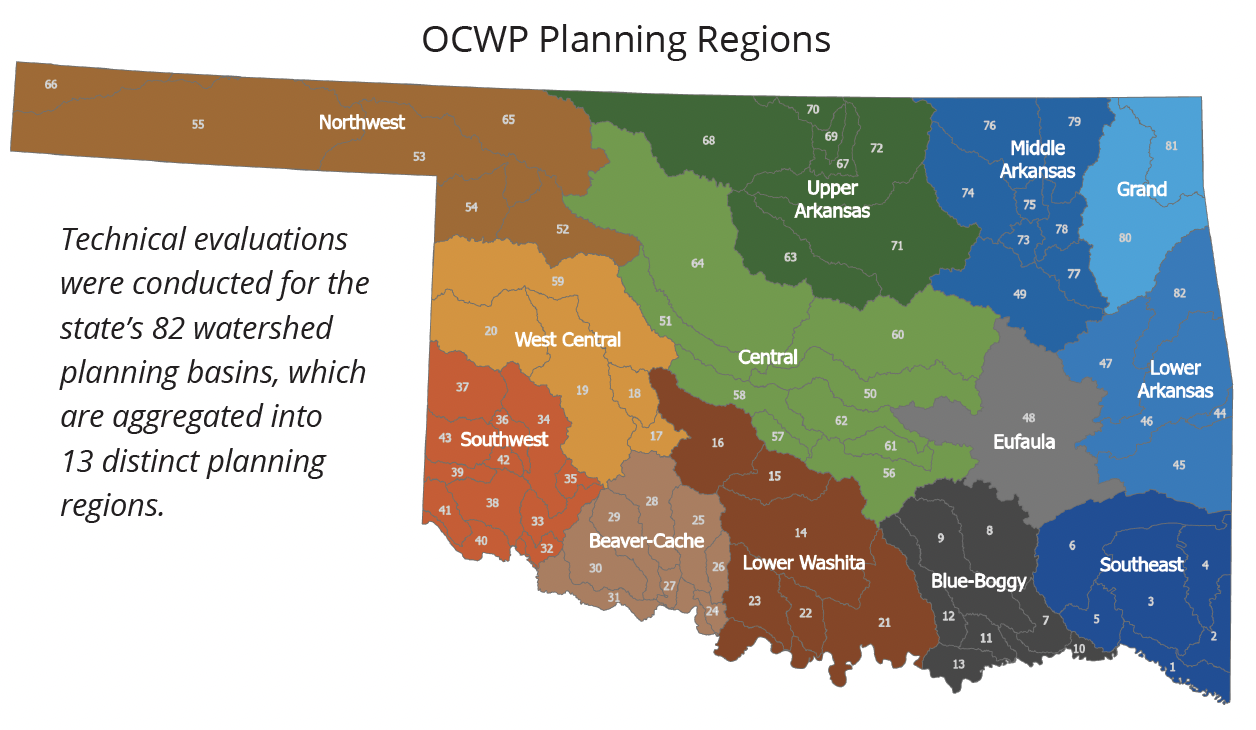
The OCWP outlines Oklahoma’s strategy for maintaining reliable water supplies and ensuring sustained certainty for investment, economic growth and environmental stability. It identifies long-term needs for each of Oklahoma’s 13 planning regions, assesses potential challenges, highlights opportunities and proposes strategies and sustained funding to develop key water resources that support Oklahoma’s competitiveness in the national market and quality of life. These plans are developed approximately every 10 years, meaning that the current OCWP (2025/2026) updates the last major plan that was completed in 2012.
Key Technical Findings
As part of the 2025 OCWP technical analyses, the state’s 13 planning regions and 82 basins were evaluated for physical and legal water supply, consumptive demand, projected shortages, potential water management strategies and infrastructure needs.
Supply & Demand
- Primary water supply source varies by region
- Bedrock groundwater is primary source for:
- Northwest and West Central planning regions
- Even mix of groundwater and surface water provides water for:
- Southwest and Upper Arkansas planning regions
- Surface water supplies:
- Remainder of the state
- Bedrock groundwater is primary source for:
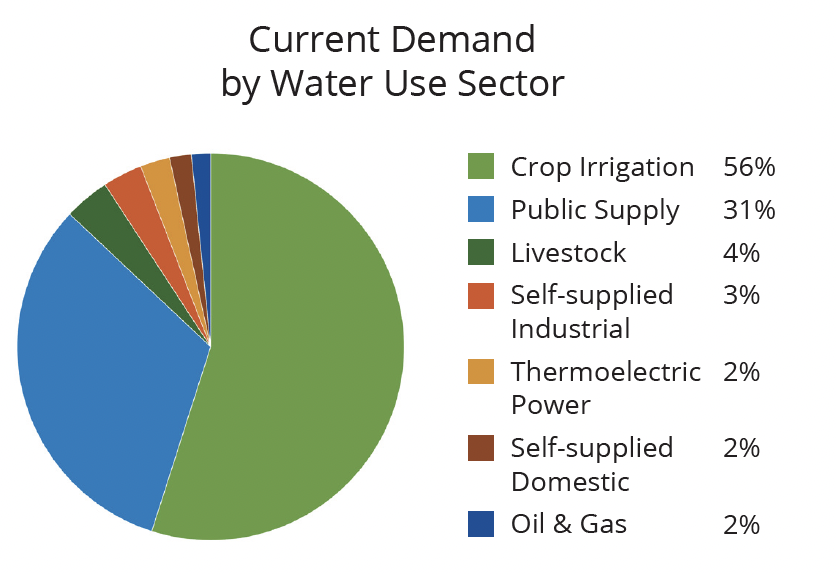
- Statewide water demand is projected to increase by approx. 13% between 2020 and 2075 due to:
- Population increases
- Sustained strength of Oklahoma’s agricultural sector
- Expanding industrial water use
- Surface Water Gaps (where projected demand exceeds available supply)
- By 2075, surface water gaps anticipated in more than half of state’s 82 planning basins
- Largest gaps expected in Central and Middle Arkansas planning regions due to population growth and competing demands on limited resources.
- Groundwater Depletions (where withdrawals exceed recharge)
- Projected in most planning basins
- Most significant depletions
- Alluvial aquifers – Central planning region
- Bedrock aquifers – Northwest planning region
- Oklahoma faces combined pressures of aging assets, growing demand, compliance issues with public health regulations & attracting a qualified workforce.
- $24 billion needed immediately to proactively mitigate these issues
- According to the US Water Alliance, an estimated 15 to 20 jobs can be generated for every $1 million invested in water infrastructure.
- Actions:
- Establish recurring fund to address Oklahoma’s infrastructure needs – Initial budget request: $50 million (recurring), 100% pass-through
- Explore and develop new revenue streams and partnerships – Legislation needed
- Address critical workforce shortage in water-related industries – Estimated cost TBD based on program scope and design
- Actions
- Implement Oklahoma State Flood Plan – Estimated cost: $1.7 million for flood planning (recurring), $5 million for infrastructure (recurring for 8 years)
- Fund Oklahoma’s upstream flood-control watershed dam rehabilitation program – Estimated cost: $15 million (one-time)
- Develop ongoing voluntary agricultural water conservation programs – Estimated cost: $5.5 million (recurring, Oklahoma Emergency Drought Committee grant $5 million (recurring)
- Fund voluntary water conservation initiative program – Estimated cost: $500,000 (recurring)
- Perform preliminary screening of off-channel reservoir sites, possible expansions and modernization – Estimated cost: $170,000 (one-time)
- Implement Oklahoma Water Reuse Action Plan – Estimated cost: TBD
- Dedicate funding for collaborative programs – Estimated cost: $4.9 million (recurring)
- Actions
- Increase dedicated, recurring funding to modernize and improve Oklahoma’s water rights administration program – Estimated cost: $907,000 (recurring)
- Complete maximum annual yield studies – Continued gross production tax allocation
- Modernize water law for groundwater management and resource reliability – Legislation needed
- Establish statutory framework for regional water management districts – Legislation needed
- Improve agriculture water use accounting and reporting by permitted water right holders – Estimated cost: $1.35 million (one-time) and $550,000 (recurring)
- Actions
- Appropriate funding for targeted regional and local actions – Estimated cost: $2.5 million (recurring)
- Restore eroded funding and statewide coverage of the state’s comprehensive stream gauging network – Estimated cost: $450,000 (recurring)
- Sustain state investment in the Oklahoma Hydronet & expand to unmonitored areas – Estimated cost: $965,000 & $475,000 (recurring)
- See more about Oklahoma Hydronet and OWRC’s involvement below!