

(Click below to view the entire interview)
https://drive.google.com/file/d/1qUCvlaJ4VyTF5UdDbSRV3YqPGaufT3rr/view?pli=1
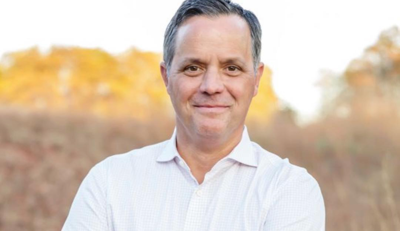
As a candidate for the Republican nomination for governor in Oklahoma, Chip Keating has some definite thoughts about energy.
Put him down as a supporter of data centers in the state, but Keating, in an interview with OK Energy Today, includes his support with an alternative plan to provide the power and needed water for the projects.
“And look, we can’t say no. Data centers, AI, those are, you
know, those are the same things. We can’t say no to it. What we need to say yes to is doing that, but doing it responsibly.”
He said data centers should not be powered on the state’s electric grid. So Keating has his own idea of how to power the data centers and where to locate them in the state.
” Let’s take them out to our wonderful, frankly, basins, whether it’s the Stack, Merge, Scoop, MidCon, the Arkoma. I mean, you name it. We’ve got unbelievable resource benches in place all over our state. Take these things out closest to the wellhead,” he said in response to a question about the impact of proposed data centers.
“Most of our electricity is generated from natural gas. Why don’t we do it right on the wellhead? And frankly, there’s a new gross
production tax opportunity. If we think about American ingenuity and doing things differently, there’s a new opportunity for a tax angle on our state that is a tax on the world, not on Oklahomans.”
Keating is a proponent of using natural gas to power the data centers rather than allowing them to get power from the grid.
“And so what I’ve told people, in no way, shape, or form would Chip Keating support doing this on grid and sticking it to the rate payers. There’s no way we should be doing that. Number two, what do every single well in Oklahoma produce? They produce water, and they produce salt water. So it’s not good water.
There’s technology today that exists that you can descale salt water that’s on loop systems out closest to the wellhead, and we can utilize that to cool these, whether they’re gel-cooled, watercooled, air-cooled, before we re-inject it through disposal wells. And I think there’s a real opportunity. You know, per MCF, the cheapest molecule of gas you’ll ever get is right at the
wellhead.”
Keating is also critical of the legislature for which he blamed in part the recent departures of the headquarters of Devon Energy and Expand Energy, two long-time Oklahoma City-based oil and gas companies.
“We should be the energy capital of the United States. And unfortunately, failed public policy and turning our backs on the energy companies in this great state. We see the outcome of that
with the departure of Chesapeake and Devon and no more.
We can’t do that. I won’t let that happen as our next governor,” he promised in the interview with OK Energy Today’s Jerry Bohnen.
Keating said the “writing was on the wall” with the two energy firms. He also agreed with the Petroleum Alliance of Oklahoma when it recently quoted an anonymous energy executive in Oklahoma who said the Houston skyline had been built on the backs of failed policies coming out of Oklahoma.
“Let that sink in. We should wake up, take note of it in reverse course. And we haven’t. And so as I think about the race for governor, I’m running against office hopping career politicians who, frankly, have been part of those failed policies that have run the biggest industry out of our state. And that’s not going to happen under a Keating administration,” continued Keating. He said the wrong decisions were made by the legislature going back to 2016 and 2017 when it “stuck revenue shortfalls to our energy industry.”
Keating says the state should consider reducing its gross production tax on oil and gas for existing energy companies in the state. He suggested it might encourage other companies to return to Oklahoma.
“As I think about where we were 60, 70 years ago, Bartlesville, Ponca City, Tulsa, Oklahoma City, we really were the energy capital of the United States. And unfortunately, we’ve just let it fall away and given it to Texas. And we’ve got to stop doing that.”
(Click here for full transcript of the interview)