


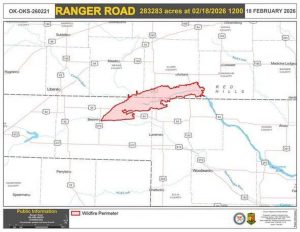
As Oklahomans in the northwest and the Panhandle suffered from disastrous wildfires this past week that burned nearly 155,000 acres in the state and grew to nearly 300,000 acres total combined with Kansas, observers witnessed what fueled some of the quickly spreading fires—–cedar trees that turned into firebombs.
Now Rep. Mike Dobrinski, R-Okeene, has picked up the mantle once held by the late former Rep. Richard Morrissette, an Oklahoma City lawmaker who championed the cause of eliminating the eastern redcedar infestation in 2010.
Dobrinski is doing it with the Terry Peach North Canadian Watershed Restoration Act (HB 2239, 2023).
Dobrinski is the author of legislation that created the Terry Peach North Canadian Watershed Restoration Act and the House author of legislation that requires the Oklahoma Conservation Commission to implement a statewide plan targeting harmful woody species on state lands. Both are efforts to reduce materials that consume massive amounts of water and lead to fire threats.
This year, Dobrinski is running House Bill 2988, which currently recommends a tax credit for those who remove harmful woody species through qualified practices as defined by the Conservation Commission. The bill passed in the Appropriations and Budget Natural Resources Subcommittee. Dobrinski said the legislation will be amended before it reaches the House full A&B Committee to instead expand the Terry Peach Act.
“February is not traditionally a month we consider a wildfire risk,” Dobrinski said. “After record snowfall last month, warm temperatures and winds have created threatening conditions earlier than usual. Woodward was spared this week, by the grace of God and the work of hundreds of firefighters and first responders. Many in the Panhandle and Northwest Oklahoma, however, have suffered great loss.”
As the Wichita Eagle reported, the fires started near Beaver, Oklahoma and swept across the state line and burned thousands of more acres in Clark, Comanche and Meade counties in Kansas.
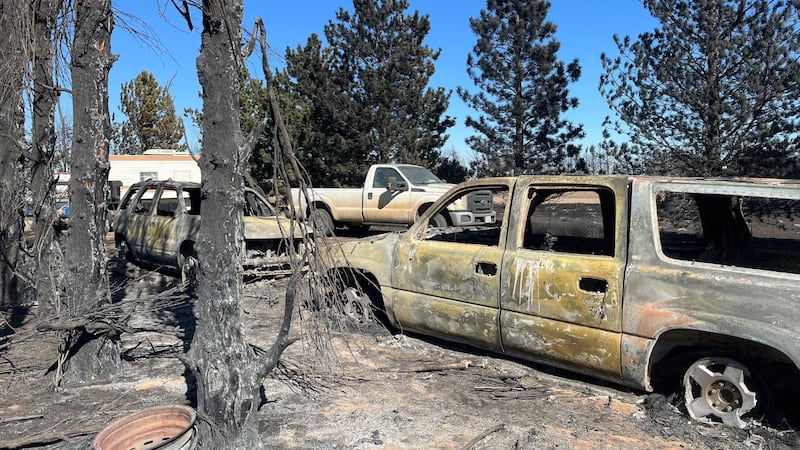
Veterinarian Dr. Randall Spare, with the Ashland Veterinary Center, has been busy euthanizing wounded cattle. He estimated 1,000-plus have died or will die as a result of the fire, reported the Eagle.
Dobrinski said lawmakers have talked for years about eastern red cedars and their challenge to the western Oklahoma water supply, along with the fire threat they present for much of the state.
“This issue predates my service at the Capitol by at least two decades,” he said. “The Terry Peach North Canadian Watershed Restoration Act was a trial study that proved that addressing this issue would improve waterflow, restore native grasslands, return ecological balance and promote wildlife habitat.”
Dobrinski said Woodward was threatened because of the proliferation of eastern red cedars southwest of the city, very much like the communities of Stillwater and Mannford, which suffered wildfires last spring.

“Our own governor lost a rural residence northeast of the Oklahoma City metro area in those fires, in an area that is very thick with eastern red cedars on neighboring properties,” Dobrinski said.
“As the governor approaches the end of his administration, we can celebrate many victories and improvements to our wonderful state,” Dobrinski said. “I encourage him to include in his legacy being the governor that decided it was time to turn the tide on our ever increasing eastern red cedar problem. I ask him to please work with our Legislature and emphasize the need to properly fund a sustained effort to improve our state’s land and water resources and ensure a safer future for generations to come.”