
Trump pushes ‘ratepayer protection’ plan tied to data centers–just like Oklahoma’s ‘behind the meter’ law
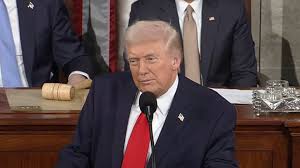
A year after Oklahoma adopted the “behind the meter” law aimed at large load users of electrical power, President Trump in Tuesday night’s State of the Union address unveiled a similar plan targeting data centers.
In one of his few references to energy during the President’s State of the Union address Tuesday night, he announced plans to work with high tech companies to keep electricity costs down as they flood the country with data centers.
He called it his “rate payer protection plan,” and said his information informed major AI companies they have to build their own power plants for their data centers. Increased electricity costs have been one of the major challenges raised by Oklahomans who have opposed data center projects in several cities and communities in the state.
President outlines data center power requirements
“Tonight, I’m pleased to announce that I have negotiated the new rate payer protection pledge. You know what that is? We’re telling the major tech companies that they have the obligation to provide for their own power needs,” said President Donald Trump in his address.
“We have an old grid. It could never handle the kind of numbers, the amount of electricity that’s needed. So I’m telling them, they can build their own plant. They’re going to produce their own electricity. It will ensure the company’s ability to get electricity, while at the same time, lowering prices of electricity for you,” he explained.
The President, in his 1 hour and 45 minute long address, went on to explain the tech companies will have an obligation to pay for their own power needs.
“They can build their own power plants as part of their factory,” Trump said.
Lawmakers and advocates react to proposal
Among those reacting to the announcement was Sen. Josh Hawley (R-Mo.)
“This is a good thing. We ought to put that into law. I’m sure these big companies that are willing to pledge that they’re not going to raise electricity rates, they’ll build their own power supply — I would support legislation to do that.”
Others were not so supportive.
“Trump’s data center announcement is a toothless, empty promise based on backroom deals with his own billionaire donors,” Climate Power Senior Advisor Jesse Lee said in a written statement.
“Trump is obsessively taking massive amounts of clean energy off the grid, Americans are paying the price, and nothing Trump is saying tonight will stop it from getting worse,” Lee added.
While not reacting specifically to the rate payer protection plan, Oklahoma Republican Congresswoman Stephanie Bice offered a response.
“As we celebrate America’s 250th year of Independence, our nation continues to strive for greater heights; and tonight, President Trump highlighted that the state of our union is strong indeed. During his speech, the President highlighted the real benefits that all Oklahomans will feel. This includes cheaper gas, higher wages, and more money in your pockets. Over the last year, we voted to extend the largest tax cuts in American history, closed our southern border, and worked to get our country back on track. Oklahomans support President Trump’s leadership and look forward to the next three years.”
It was last year when Governor Kevin Stitt signed Senate Bill 480 into law. Authored by Sen. Grant Green, R-Wellston, the bill, according to the Senator is expected to generate billions in new private-sector investment, empowers businesses to develop and manage their own power and electric facilities.
This legislation is designed to increase energy generation as the demand for electricity rises nationwide due to a growing number of large-scale manufacturing facilities, data centers and artificial intelligence processing centers.
“This legislation puts Oklahoma on the forefront of energy innovation and economic competitiveness while ensuring we continue to support and respect the role of our longtime electric utilities,” Green said. “Senate Bill 480 sends a clear message that our state is ready to welcome major investment from companies looking to build, expand and lead in emerging fields. By giving businesses the flexibility to develop their own power infrastructure, we’re cutting red tape, relieving pressure on the electric grid and making Oklahoma more attractive to advanced manufacturers and AI-driven businesses. I was grateful to work with Representative Boles on this important legislation, and I appreciate the governor signing it into law.”