
House Backs Bill Protecting Natural Gas Home Appliances
Natural gas appliances vote draws support from Oklahoma delegation
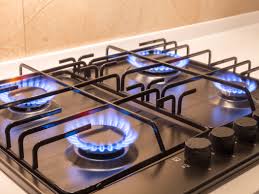
Don’t touch my gas stove. It’s the message in the U.S. House this week as all five Oklahoma members in the U.S. House voted in support of a bill aimed at reversing efforts of the Biden administration to stop the use of natural gas home appliances.
The House voted 217-190 in support of H.R. 4626, the Home Appliance Protection and Affordability Act, introduced by Rep. Rick Allen (R-GA). This legislation amends the Energy Policy and Conservation Act to modify the way the U.S. Department of Energy updates energy conservation standards.
Reps. Josh Brecheen, Stephanie Bice, Tom Cole, Kevin Hern and Frank Lucas were in the majority who favored the bill also known as Don’t Mess With My Home Appliances Act.
The measure now heads to the U.S. Senate. But the House support drew the support of the American Gas Association whose President and CEO Karen Harbert offered comments in response.
“I am encouraged by action taken by the House to recenter appliance standards towards the original intent of the statue to focus on energy efficiency and cost savings which ensures natural gas appliances get fair consideration,” she said. “Customers deserve the right to choose the appliances that are right for them and their families. This bill is a productive first step in what we hope will be an ongoing dialogue with the Senate to maintain access to the natural gas appliances customers overwhelmingly want.”
The American Gas Association contends the use of natural gas for heating, cooking and clothes drying is far cheaper than all-electric homes, saving an average of more than $1,000 a year.
Energy standards debate and federal policy backdrop
The vote comes amid a broader national debate over appliance efficiency rules, electrification policies, and the role of natural gas infrastructure in U.S. homes. Federal energy efficiency standards have long been updated through rulemaking by the U.S. Department of Energy, with industry groups, consumer advocates, and environmental organizations often clashing over how aggressive those updates should be.
Supporters of natural gas appliances argue they offer reliability, affordability, and consumer choice—particularly in regions where electricity costs fluctuate or where natural gas distribution systems are already well established. Critics, meanwhile, have pushed for stronger efficiency standards and expanded electrification, saying the shift could reduce emissions and modernize the nation’s residential energy use.
The legislation’s supporters say changes to the Energy Policy and Conservation Act are intended to ensure appliance standards remain rooted in cost-effectiveness and energy efficiency rather than eliminating certain fuel sources from the market.
The issue has drawn significant attention in states like Oklahoma, where natural gas production and energy affordability are central to both household budgets and broader economic policy discussions.
As the bill moves to the U.S. Senate, debate is expected to continue among lawmakers, industry groups, and regulators over how best to balance consumer choice, energy efficiency, and the future of home energy technologies.