

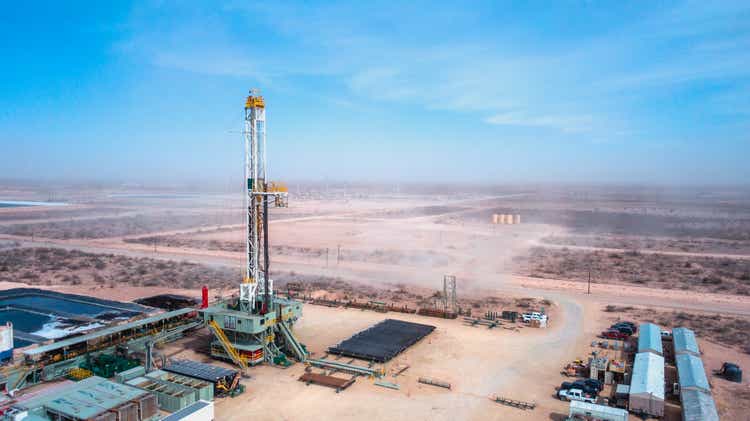
Drilling for oil in the western reaches of Argentina, the play known as Vaca Muerta, looks much like drilling in the Permian Basin of West Texas and Southeast New Mexico.
The terrain is flat and dry but it is also a host for major deposits of shale oil and shale gas. Vaca Muerta is Spanish for dead cow but for the oil and gas industry, the production is anything but dead.
That’s apparently why Oklahoma oilman Harold Hamm, the man who became a billionaire and confidante of President Trump with the success of his Continental Resources company, is interested in investing more in Argentina. As OK Energy Today reported, Hamm recently announced a second acquisition in the oil rich region of the country.
Why is the formation becoming such a magnet for Hamm and other oil and gas explorers? The formation, according to geological websites, is a formation of Late Jurassic to Early Cretaceous age, located in the Neuquén Basin in northern Patagonia, Argentina.
A major oil discovery in the formation was made 16 years ago by the former Repsol-YPF. The total proven reserves are around 927 million barrels, and as of 2014 YPF‘s production alone was nearly 45,000 barrels per day. Two years after the discovery, Repsol-YPF raised its estimate of oil reserves to 22.5 billion barrels while the U.S. Energy Information Administration estimated recoverable hydrocarbons at 16.2 billion barrels of oil and 308 trillion cubic feet of natural gas.
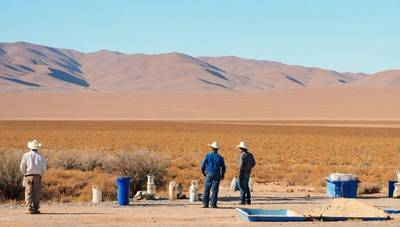
As of the fall of 2024, there were more than 1,500 fracking wells, cause for some 2013 protests over the huge water consumption and a 2018 lawsuit by the indigenous residents known by the Mapuche, who sued Exxon, the French company TotalEnergies and Pan American Energy for “dangerous waste” due to “deficient treatment” close to the town of Añelo as oily sludge residue from fracking was tipped in illegal waste dumps.
The formation is also known for its fossils, such as those of marine reptiles.
Geology

Although the name Vaca Muerta Formation was introduced to the geological literature in 1931 by American geologist Charles E. Weaver, the highly bituminous shales in the Salado River valley in southern Mendoza were described in 1892 by Dr. Guillermo Bodenbender. German paleontologists Beherendsen and Steuer determined the Tithonian age of these shales.[14] In several outcrop locations, the Vaca Muerta Formation has been the site of paleontological finds: the crocodylomorph Cricosaurus and possibly Geosaurus, the ichthyosaur Caypullisaurus, and the pterosaurs Herbstosaurus and Wenupteryx.