

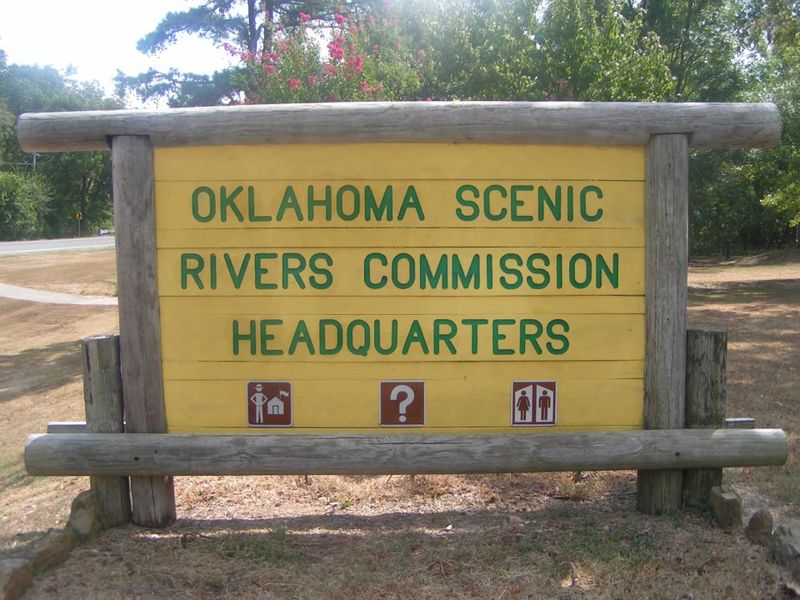
Scenic Rivers commissioner criticizes poultry pollution settlement
A member of the Oklahoma Scenic Rivers Commission says a recent federal court ruling tied to the Illinois River poultry pollution lawsuit will have little practical impact on nutrient runoff while placing new financial pressure on Oklahoma poultry producers.
Writing in a Sunday column for The Oklahoman, former Scenic Rivers Commission chairman Rick Stubblefield of Proctor argued that the ruling does not significantly change how much poultry litter fertilizer can be applied within the Illinois River Watershed.
“The bottom line is basically the same amount of poultry litter can legally be used in the Illinois River Watershed this year as last year,” Stubblefield wrote.
Attorney General criticized over enforcement role
Stubblefield directed sharp criticism toward Oklahoma Attorney General Gentner Drummond, whose office pursued the lawsuit that resulted in the court decision.
According to Stubblefield, the ruling gives the attorney general new authority over who can sell poultry litter and where it can be applied.
“The only difference is the attorney general is now deciding who can sell it and where, picking winners and losers among Oklahoma’s poultry growers,” he wrote.
Stubblefield argued that cattle ranchers who rely on poultry litter to fertilize pastureland will still be able to use the product, but may be forced to source it from outside the watershed, potentially raising costs and disrupting long-standing supply relationships.
Economic fallout for poultry producers
Stubblefield warned that the broader economic consequences could be severe for rural Oklahoma communities, particularly poultry growers operating within the watershed.
“This proves the political chest-thumping from the attorney general is nonsense, but the implications for our rural communities are very real,” he wrote.
He pointed to Tyson Foods, which recently notified growers of plans to end poultry operations in Oklahoma, citing frustration with what Stubblefield described as ongoing political and legal uncertainty.
Stubblefield said the loss of integrators like Tyson could push hundreds of poultry farmers toward bankruptcy, even though poultry litter itself remains a legal fertilizer.
Longstanding opposition to lawsuit
The former commission chairman emphasized that poultry litter will continue to be an important nutrient source for cattle operations in the watershed, but questioned whether the attorney general’s approach is sustainable.
“The big question is whether the attorney general will continue on a course that puts hundreds of Oklahoma farm families out of business,” Stubblefield wrote.
This is not the first time Stubblefield has opposed the lawsuit. In a 2006 column, he previously described the case as a “sham,” arguing it would do little to improve water quality while harming agricultural producers.