

Winter storm forces fuel switching across regional grid
Although petroleum-fired electricity generation accounts for less than 1% of total U.S. utility-scale power generation, it remains a critical fallback fuel in parts of the country during extreme winter weather — particularly in New England.
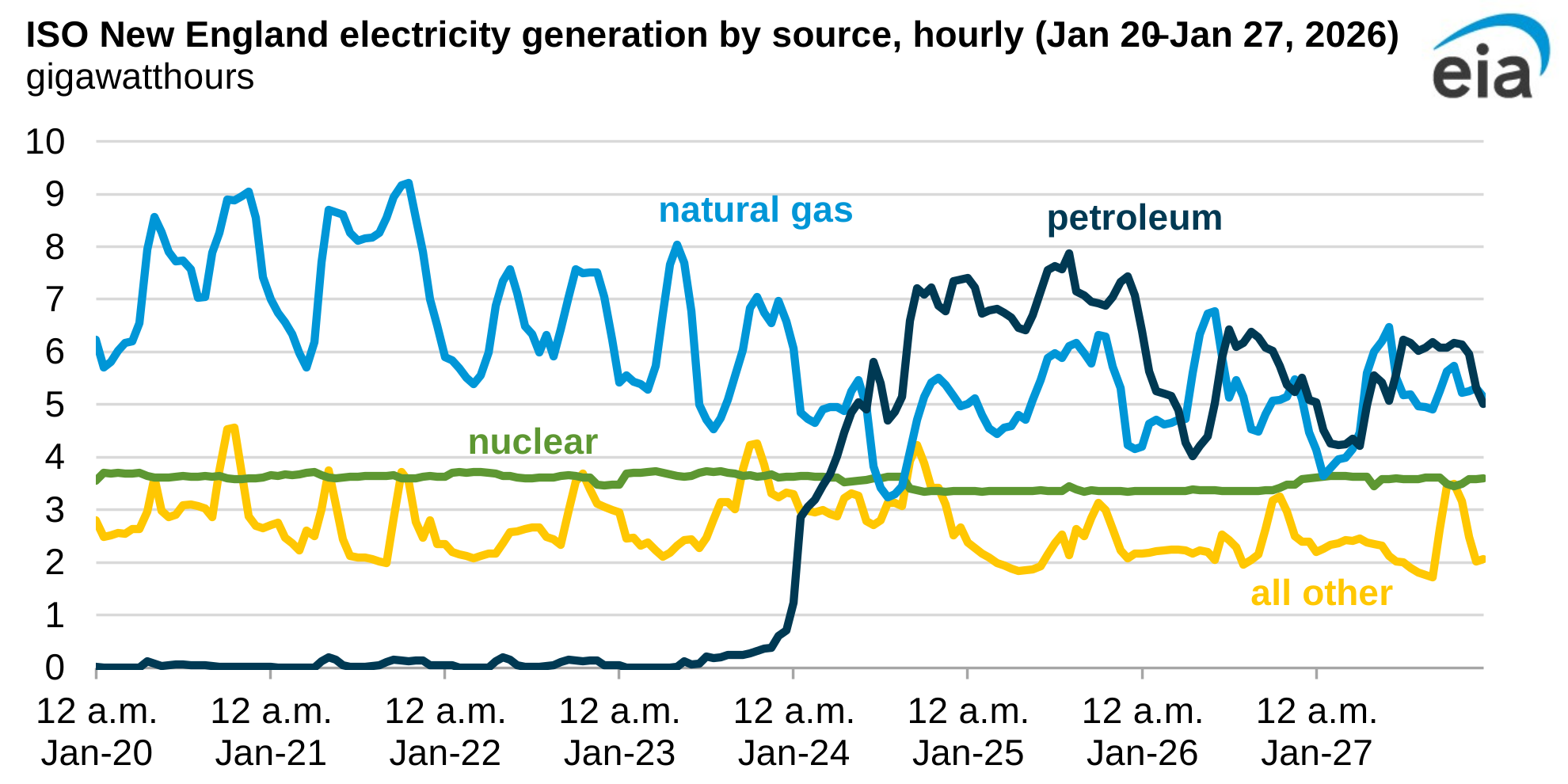
During Winter Storm Fern, petroleum temporarily became the dominant electricity source across New England, overtaking natural gas-fired generation as cold temperatures drove demand higher and strained fuel availability. Data show petroleum was the primary power source beginning around midday January 24 and continuing through early morning January 26, before fluctuating again with natural gas as conditions stabilized.
New England relies heavily on oil-fired power capacity
New England’s total generating capacity stands at 35.5 gigawatts (GW), representing just 3% of total U.S. generating capacity. However, the region holds a disproportionately large share of the nation’s petroleum-fired power capacity — roughly 20% of the U.S. total.
Of that petroleum capacity:
-
Residual oil-fired boilers account for 58%, or 3.2 GW
-
Combustion turbine generators, primarily using distillate fuel oil (DFO), account for the remaining 2.3 GW
This infrastructure allows grid operators to quickly ramp up oil-fired generation when natural gas supplies tighten.
Fuel-switching units push petroleum output beyond capacity
During the peak of Winter Storm Fern, petroleum-fired generation reached nearly 8.0 GW between January 25 and January 26. That output exceeded the region’s installed petroleum-only capacity, indicating that fuel-switching power plants were also contributing to the surge.
Nearly 41% of New England’s 15.1 GW of natural gas-fired capacity consists of units capable of switching fuels — typically from natural gas to distillate fuel oil — when gas becomes unavailable or prohibitively expensive.
Fuel switching often occurs during severe winter events because natural gas supplies are frequently prioritized for residential heating, leaving less available for power generation. When pipeline constraints or contractual obligations limit gas delivery, generators turn to petroleum to maintain grid reliability.
Storm highlights ongoing reliability concerns
The temporary shift underscores ongoing concerns about energy reliability, fuel security, and infrastructure constraints in the Northeast. While oil-fired power plays a limited role nationally, extreme weather events continue to reveal its importance as a backup resource when natural gas systems are stressed.