

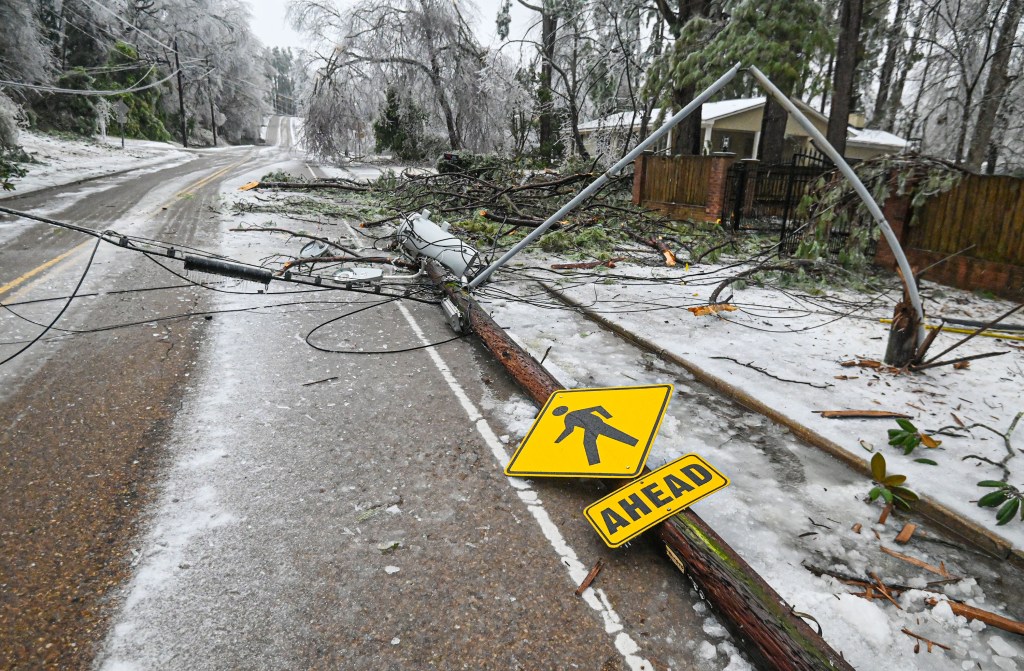
While Oklahoma’s electric grid escaped major damage and the Southwest Power Pool is returning to normal operating conditions, states east of Oklahoma have suffered historic storm damage.
AccuWeather experts say the winter storm that impacted more than 200 million people across more than two dozen states is expected to result in $105 billion to $115 billion in total damage and economic losses.
“The scope of this winter storm was extraordinary. What sets this storm apart is not just the snow and ice, but how widespread the disruption has been across transportation, energy, commerce and daily life,” AccuWeather Chief Meteorologist Jonathan Porter said. “The extreme cold pouring in behind the storm dramatically increases risks and slows recovery in many of the hardest-hit areas.”

“Damage to trees, power lines and infrastructure from freezing rain and ice becomes much more costly when cold air locks it in place, and repair work is slowed by hazardous conditions,” Porter said. “This storm has created a cascade of impacts, from grounded aircraft and closed roads to stalled supply chains and business closures.”
The nation’s crude oil production was also affected. Reuters reported U.S. oil producers lost up to 2 million barrels per day, or up to 15%, of the country’s production over the weekend, analysts and traders estimated, as a winter storm swept across the country, straining energy infrastructure and power grids.
Oil production outages peaked on Saturday at 2 million bpd, consultancy Energy Aspects estimated, with the Permian Basin likely to have experienced the largest share of that decline at around 1.5 million bpd Reuters shared. Production losses eased on Monday, with Permian shut-ins estimated at about 700,000 bpd and production set to be fully restored by January 30.
U.S. oil and gas producer ConocoPhillips’ Permian crude production was down by 175,000 bpd as of Sunday owing to frigid weather, according to a source familiar with the matter, who was not authorized to speak on the record.
This historic winter storm is the costliest weather disaster in the U.S. since the Southern California wildfires from January 2025, which caused an estimated $250 billion to $275 billion in total damage and economic loss, according to AccuWeather experts.
A stretch of dangerously cold Arctic air in the wake of the storm is expected to complicate recovery and power restoration efforts in some areas.

“Prolonged freezing temperatures increase the likelihood of secondary damage, including frozen pipes, structural issues and additional business interruptions long after the storm has passed,” Porter explained. “The financial fallout from this winter storm continues to climb as recovery efforts are delayed. Extreme cold can make it harder to restore power, reopen roads and return businesses to normal operations.”
There are growing safety concerns for hundreds of thousands of people who are without electricity and heat after the storm, especially across the South and Southeast U.S.


“Extended power outages during freezing nights can become life-threatening, especially in parts of the South where homes are not built to retain heat for long periods,” Porter explained “Mobile homes are particularly vulnerable in this situation. Cold air can flow underneath them, causing indoor temperatures to fall rapidly once power is lost. When electricity is out and temperatures drop below freezing overnight, indoor conditions can become dangerous in just a few hours without a reliable and safe heat source.”
Porter said people should use extra caution while operating generators and other emergency heating sources after the storm.
“Some of the most dangerous storm impacts happen long after the ice and snow stop. When neighborhoods are without power for days, people often turn to portable generators, grills and other fuel-burning equipment,” he warned.
The combination of freezing rain, ice, snow and cold that impacted more than two dozen states over the weekend triggered more than 20,000 flight cancellations.
“Transportation networks are expected to return to normal this week, but delays will persist as systems work through the backlog,” AccuWeather Senior Director of Strategic Projects Marshall Moss said. “Businesses that rely on critical parts or materials will continue to face production delays until supply chains are fully restored, after which they must still address pent-up demand. These factors create a cascading effect, where transportation disruptions and power outages slow the return to normal business operations.”
Another winter storm may threaten the East
expert meteorologists are closely monitoring the potential of another winter storm this weekend that could bring more snow and ice to parts of the East Coast, potentially complicating recovery and restoration efforts from the weekend storm.

The AccuWeather preliminary estimate of total damage and economic loss accounts for damage to homes and businesses, disruptions to commerce and supply chain logistics, tourism losses, impacts to shipping operations at major hubs, financial losses from extended power outages, major travel delays, as well as damage to infrastructure. This is a preliminary estimate, as the storm effects continue to be felt and some areas have not yet reported complete information about damage, injuries and other impacts.
AccuWeather incorporates independent methods to evaluate all direct and indirect impacts of the storm, which include both insured and uninsured losses and are based on a variety of sources, statistics and unique techniques AccuWeather uses to estimate damage. It includes damage to property, job and wage losses, crops, infrastructure, interruption of the supply chain, auxiliary business losses and flight delays. The estimate also accounts for the costs of evacuations, relocations, emergency management and the extraordinary government expenses for cleanup operations and the long-term effects on business logistics, transportation and tourism, as well as the long-term and short-term health effects and the medical and other expenses of unreported deaths and injuries.