

Will Oklahoma’s oil and gas industry be impacted by the the U.S. takeover of Venezuelan oil?
Likely not, according to noted energy economist Dr. Steven Agee. He says Oklahoma’s oil and gas industry will likely see little if any impact from the U.S. removal of Venezuelan leader Maduro and the takeover of the oil and gas industry in the South American country.
“—there’s nothing, probably even in 2026 that’s gonna happen to increase supplies coming out of there to affect the United States and to affect Oklahoma. So I don’t think Oklahoma producers have to be worried about that in the short run,” advised the respected economics leader who specializes in specializing in energy policy, banking, monetary theory, and macroeconomic policy.
Interviewed by Scott Mitchell for his News 9 Hotseat show, Agee, dean emeritus of the Meinders School of Business at Oklahoma City University, added, “They may in the long run, three to five years, 10 years, maybe, it’s gonna take over $100 billion of expenditure to upgrade what’s going on in Venezuela right now, to get more oil out, to improve the infrastructure.”
He explained Venezuela had not maintained its oil and gas facilities for two to three decades, and as a result it would require a lot of time and money to build back the infrastructure to get the oil to market. Plus, there is the issue of the kind of oil produced by Venezuela, an oil that is heavy, thick, sour and more dense than the finer oil that is produced in Oklahoma and other oil states.
“So it’s got some things that they’re gonna have to take out of that before it’s really processed and refined. And they usually blend that heavy oil with lighter oils to reduce the stickiness or the viscosity of it. So that’s long-term. I think right now producers in Oklahoma don’t need to fear about a big supply increase,” said Dr. Agee.
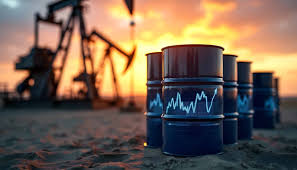
He also believes that over time, consumers “obviously are gonna benefit” because of the increase in crude oil supply.
“The more crude oil there is on the market in the world, the lower the price is gonna be. And when they refine those products into gasoline or diesel or jet fuel, we’re all gonna benefit from a lower price like that. But producers, I think, in the long-term need to be wary of what’s going on in Venezuela and really other parts of the world.”
Agee touched on a number of other energy subjects, Artificial Intelligence and the demand for more electrical power, “all of the above” energy efforts in the state, data centers and reforming the nation’s energy permitting process.
Having served in the private sector for thirty years as President and COO of oil and natural gas exploration and production companies, Dr. Agee has the unique combination of academic and private industry experience to administer, teach, design and implement new programs and speaker’s series in the energy field. In addition, having served six years (2006-2011) on the Board of the Federal Reserve Bank of Kansas City, Oklahoma City Branch, the last three as its Chairman, Dr. Agee has enormous contacts and resources in the banking industry, and has taught Money & Banking at Oklahoma City University.
***********
Scott Mitchell’s interview transcript is below:
Good morning, welcome to Hot Seat. I’m Scott Mitchell, delighted today to have my guest, the Dean Emeritus of the Meinder School of Business at Oklahoma City University, Dr. Stephen Agee.
Good to see you, sir.
It’s great to see you too, Scott. Thanks for inviting me. Thank you very much.
It’s been a while, we’re sitting around with our stock portfolios, all of us in Oklahoma that are into that, going, what the heck is going on? So let’s start with, a lot of folks in Oklahoma are invested, or work, or have family they’re involved in the oil patch. And I wanted to try to talk about some of the definitions right now. It’s been said by observers tell me, look, we’re not really an oil and gas state as much as we are a gas state now, in terms of what we’re producing in Oklahoma.
And people are going, now, if Venezuelan oil floods Oklahoma, how’s it impacting? So a lot of this is hype, but help us understand, unpack everything for us in terms of our concern about our Oklahoma economy and what’s happening on a, at least in the Western Hemisphere.
A: Okay, so Oklahoma is definitely an oil and natural gas state, there’s no question. Now we do produce a lot of natural gas, but we produce a lot of crude oil as well. In terms of Venezuela, that’s a long-term issue, okay? That’s, there’s nothing, probably even in
2026 that’s gonna happen to increase supplies coming out of there to affect the United States and to affect Oklahoma. So I don’t think Oklahoma producers have to be worried about that in
the short run. They may in the long run, three to five years, 10 years, maybe, it’s gonna take over $100 billion of expenditure to upgrade what’s going on in Venezuela right now, to get more oil out, to improve the infrastructure.
They haven’t maintained that, those facilities for probably two or three decades. So it’s gonna require a lot of time, a lot of money to build back the infrastructure to get that oil to market. It’s
a heavy, sour, crude oil. So that oil typically, if it comes into the United States, goes into the Gulf Coast, those refineries are set up for heavy, sour, crude. By heavy, we mean it’s a thicker, more dense crude oil than it is from, say, Oklahoma and north of us and the Bakken Shale and the Dakotas. That’s a finer oil.
It’s a lighter, sweet crude, we call it. And plus that oil in Venezuela has H2S hydrogen sulfide. So it’s got some things that they’re gonna have to take out of that before it’s really processed and
refined. And they usually blend that heavy oil with lighter oils to reduce the stickiness or the viscosity of it. So that’s long-term. I think right now producers in Oklahoma don’t need to fear about a big supply increase.
To the extent that supply does increase over time, consumers obviously are gonna benefit. The more crude oil there is on the market in the world, the lower the price is gonna be. And when
they refine those products into gasoline or diesel or jet fuel, we’re all gonna benefit from a lower price like that.
But producers, I think, in the long-term need to be wary of what’s going on in Venezuela and really other parts of the world. You know, if President Trump, he’s kind of threatened Mexico,
he’s threatened Cuba, he’s threatened Greenland. There’s a lot of things going on, a lot of balls that are being juggled in the air right now.
SM: We just need to figure out, okay, really what’s the strategy here? If there is one and can you lay out the strategy and the timing of that? Help us understand, so you made sure we know it’s oil and gas and that gross production tax is something that really drives our economy and our state government in Oklahoma. What does oil need to be to be healthy for the companies in Oklahoma and for the state of Oklahoma?
SA: Well, that’s a great question. It varies really based on
the basin or region that you’re producing from. The Permian Basin has a lot of oil production there and the cost of bringing that out is probably a little bit less than it would be in some other parts of the United States and certainly other parts of the world. Extracting oil in Venezuela is gonna be expensive. It’s gonna take a lot of
time and money, as I mentioned. So I think that’s a key factor in what we’re gonna do going forward. What was the other?
SM: The companies, what do they need?
SA: Our Oklahoma is- Okay, the price, you’re right. What do they
need to be profitable? The price, I would say, needs to be over 60.
I’m sure they’d rather have 70 or $75 oil. The last, I saw a Federal Reserve study that indicated that it would take around 58 to $64 a barrel just to break even on a lot of the plays that are ongoing right now. So that price needs to come up from where it is in order for it to be competitive and for producers to go out and drill new wells.
SM: One of the things when I had a highlight of my past year was getting to spend some time with Alan Armstrong from Williams Companies and we began to talk about the issue, which is
permitting reform. It appeared we were on the way to getting some permitting reform done in Congress, but at the last minute there was a breakdown bipartisan-wise. How important is that
to Oklahoma and the country with the demand that we’re seeing in electricity? And we’ll get into that in just a moment, but how important, how desperate are we to get something done on permitting reform so we can get more electrons?
SA: So are you talking about electricity now or
oil and gas?
SM: Right now, transmission, pipelines, that’s where I’m at.
SA: Okay, so, well, I think transmission is important, whether it’s electric transmission or whether it’s oil and gas transmission. We’ve got to get the product to market. So we’ve got to get crude oil to refineries to be refined. We’ve got to get natural gas to the end-user markets. We’ve got to get electricity to the residential customer and the commercial customer. So our electricity infrastructure has kind of been neglected for many, many years, so we’re going to have to upgrade that. I hope that they expedite the process to get permitting done.
SM: That would be very helpful. You’re seeing the headlines based upon what’s happening from a standpoint of regenerative AI. It needs a lot of electricity. We see utilities all over the country saying, you’ve got to add all of this. Now there’s discussion about, well, a lot of this, number one, it’s not profitable yet, doesn’t seem to be, if you own stocks in that field. The second thing is, you’ve got to have this, but are we doing too much or too many plants coming on? Consumers having to pay for more production than will ever be needed. Help us understand that problem or that discussion that’s ongoing.
SA: Well, usually when you’re on the front end of a new technology like AI is, there’s a rush to get in first. The bubble. They want to be the first one in. And so we’re seeing a lot of the construction of these AI facilities around the country. A lot of them have already been built around the D.C., Washington, D.C. area, because they need a lot of data around there because companies headquarter around there. Like Virginia.
SM: Right, for lobbying purposes.
SA: So that’s a high traffic area around the Virginias and around Washington, D.C. They’re building some here in Oklahoma because the land is cheap. You know, the resources are plentiful.
Electric prices here in Oklahoma are relatively low based on the rest of the country.
So Oklahoma is kind of a prime spot if they want to build some of those AI plants here. Now, with regard to the amount of electricity it’s going to require, well, that’s going to ramp up
what’s required. So it’s either the cost is going to go up or we’re going to have to provide additional electric power resources.
And that usually comes from, in Oklahoma, most of the electricity is produced by using coal. We still have coal-fired plants in Oklahoma. We have a lot of natural gas-fired plants.
We have a little bit of hydro water over in Northeast Oklahoma at the Grand River Dam Authority. We do have wind. We have solar.
We need all of those resources for electric power generation. And it was disappointing to me to hear that Trump’s kind of taking solar and wind kind of off the table. He’s trying to reduce some
of the things going in terms of offshore wind production and some solar production. And we need that. We need that production. We need that for energy electrification purposes.
SM: Follow up on that question. The governor here, who’s also now chair of the National Government Association, has had a policy of all of the above. He wants every bit of electricity
that he can get. And a lot of companies, they don’t care where it comes from. They just need the electrons, right? But when you have that sort of policy, it flushes a lot of activism and a lot of pushback. We’ve seen that right here in Oklahoma. You have everything from environmentalists who are concerned about, justifiably concerned about water usage, that sort of things. But also you see a lot of conspiracy theories on both edges of the spectrum. How difficult is it to create a rational energy policy when you have a lot of activism? Some of it’s just based upon tin hat theories.
SA: Well, that’s certainly challenging. I have a good friend, Mike Ming, who used to be the Energy Secretary here in the state of Oklahoma. And he developed an energy plan for the state when
he was Energy Secretary under Governor Fallin. And it was a really comprehensive, well-thought-out, well-designed energy plan. Now, that’s been 12 or 14 years ago, so they need to update that. But that plan was all-inclusive as well.
They wanted to make sure that we not only used our oil and gas resources from Oklahoma, but our wind resources, our solar resources. Mike was one of those that advocated for all types of
energy resources, just like Governor Stitt. And I hope that they can develop a plan along what he did about a decade ago to incorporate all those.
There is a lot of noise. There’s both sides. There’s environmental side, there’s production side. And I think they just need to balance that out because there is a need. We have to have energy for our economy to run. And so, years ago, when some of the representatives came out against, the congressional representatives came out against oil and gas, they created this Green New Deal concept.
Well, that wasn’t realistic because they just basically wanted to shut down the oil and gas industry and eliminate hydrocarbons in the energy mix, which we can’t do, okay? 80% of our domestic consumption of energy in the United States comes from hydrocarbons, from oil, natural gas, and coal, okay? 80%. And we consume, in the United States, about 100 quadrillion BTUs of energy every year. And I know that’s a fanciful term, but that’s how we measure it.
So in the United States, 100 quads of energy we use every year. And 80% of that comes from oil, natural gas, and coal. So we can’t just displace that with solar and wind. It just, there’s not enough solar and wind, and it would be terribly inefficient to even try to do that. We do need solar, we do need wind, we do need hydropower, we do need nuclear power. And there’s been discussion about having research done about a nuclear plant in Oklahoma. And I encourage that research. I’d like to see, well, okay, where would we put a nuclear plant? How much would it cost? How much would it generate? How would that benefit our state?
SM: Those kind of questions I think we really need to look forward to. And in an energy, comprehensive energy plan, if the governors, or the new governor, whoever that might be, puts that together, it’d be very helpful, I think, for our state going forward. I saw where a couple members of the MAG7 this week are working together. I think Apple and Meta combining on a nuclear plant, and that’s something that’s gonna be interesting. I’d like for you to put on your banking hat for just a minute.
You’ve been on the original Fed, you understand this industry as well as anybody. And we’re watching, I just mentioned the MAG7, we’re seeing so much of our economy right now being pushed along by people investing in these companies, what they’re doing, the cap expenditures on data centers and AI. Is this a bubble?
SA: That’s a great question. I think we’re entering a bubble of some sort. I mean, the stock markets here have just gone crazy over the last couple of years, and it cannot keep going up the way it has. It’s just, that’s just not the nature of markets. There’s gonna be a correction at some point. If it’s gonna be in the AI space, or it’s gonna be in the tech space, that’s probably where it’s gonna occur, because most of that upward pressure on stock prices is occurring in these tech industries. So there could be, I don’t know when it could come, and I’m not gonna predict when it could come, because, but it’s just, we’re getting to a point where the markets are so high right now, and the earnings per share, you know, it’s just something people need to really take a close look at I think.
SM: All right, people will be analyzing that statement really closely now. All right, let me ask you also about issues like housing that face Oklahoma. I’ve got a real estate agent, a broker, cousin
who’s in Palm Springs, who’s had a really good year last year, but everything he sold last year was to really wealthy families.
The middle class, not buying a lot of property right now. We’re seeing the president feuding with the Fed chair about interest rates, which us all hate it. Well, that’s a really complex issue.
I’m on a committee actually right now that’s studying housing in Oklahoma and affordability of housing in Oklahoma. And one of the problems we have, not just in Oklahoma, but around the
country, is we’ve got investors from outside Oklahoma, and they might not be international investors. They might be from Chicago or New York or LA that are coming into Oklahoma, and they’re, especially like during COVID, when things got depressed and things got shut down and prices fell, they came in and bought lots and lots of houses that were at a depressed price at that time.
And they just held them, and sometimes they would rent them out, maybe at higher rents than they were. Sometimes they would fix them up and turn around and sell them. So they’re playing the buy low, sell high strategy, which typically works if you do it right.
And so, but that locked out a lot of potential buyers of people in a lower socioeconomic class, I’m talking about monetarily, financially. They couldn’t afford to compete with these big out-of state companies coming in here and bidding up the prices of houses. So one of the things we’re gonna try to encourage the state legislature to do is check that, do some research on, well, who is it coming in? How many houses are they buying? How does that affect the price? How does that shut out people in Oklahoma that wanna start a home, but it makes it unaffordable to do? So that’s one thing I think we should be looking at.
Seriously, we regulate utilities because they’re monopolies. And when big companies come in here and buy big swaths of housing or land, it creates a little monopoly in that area. And so I
think we need to kind of take a look at, well, maybe some of that needs to be regulated. I think there’s probably gonna be some legislation on that. Last question, you see what the public just over, they’re just overstimulated right now with news. There seems to be chaos from week to week that changes.
People are trying to understand, what do I do with my home? What do I do with my stocks?
What should I be worried about? In 26, what are some trends that, I’m putting you on the spot on here, on the spot, but what are some of the trends that you think we in the media as well as
the public need to be focused on as we try to make the decisions about how life works in the middle class in Oklahoma?
SA: So you asked a little bit ago about interest rates. Well, in terms of the upcoming election we have in November, that’s gonna be a real pivotal election. So that’s in this year. So we need to keep an eye on that. The economy always seems to drive election outcomes. And one of the components of the economy is the interest rate.
And right now with what President Trump is doing at the Federal Reserve, he’s trying to displace the chairman of the Federal Reserve, Jerome Powell, which I disagree with. I think he’s
been a very good chairman. He’s been diligent. He’s been the kind of chairman you want to have a moderate approach to monetary policy. And Trump’s trying to get rid of him, I think is concerning to me because we do need an independent Federal Reserve. So that’s another thing that press should keep an eye on.If we can maintain an independent Federal Reserve, that’ll be good for monetary policy and for our economic outlook. Now, in terms of energy prices, right now energy prices are relatively low. You know, gasoline prices are low. That benefits consumers. Upper tier income folks are still spending money. So personal
consumption expenditures, which makes up 70% of GDP is strong right now. A lot of that is in upper third or two thirds of the Americans because they have the most money.
We just need to look at the disparity between the lower income and the higher income people to see, you know, we don’t want that to cause problems long-term. The market, I think, is high.
It’s probably overvalued. So you need to pay attention to if there is the start of a downturn when that’s gonna occur and how you need to position yourself for that for sure.
SM: Well, Dr. Agee, first off, I’m gonna go look at the portfolio again and because I know you said timing the market is, it’s very difficult. You cannot time the market, yeah, right. Well, thank you for your time.
SA: My pleasure.
SM: It’s always good to visit with you. Always great to visit with you and we’ll hope this is, we’ll get to see you again real soon because there’s, next week it’ll be totally different.
SA: That’s right.
SM: There’s a lot of topics we can talk about and there’ll be new ones as we go along. Thank you, Dr. Agee.
SA: My pleasure.
SM: Thanks for watching Hot Seat with Dr. Agee. You can see our entire unedited version right now at news9.com and news16.com and follow me at Mitchell Talks.