


Coweta Data Center Update Draws Questions as National Concerns Grow
Time for another update regarding data center developments and the issues surrounding them around the country.
Coweta Residents Continue to Question Project Atlas
One of the most closely watched projects is in Coweta, where the city recently sold land for the site of Project Atlas. The city created a website focused on questions regarding the land sale, the site, what the center’s operation might mean for Coweta, and the challenges and risks associated with the center.
The site also outlined the schedule for upcoming public meetings by various city boards and commissions.
With the project structure now clarified, the City is negotiating a development agreement with Beale. That agreement will go before the City Council alongside the rezoning/PUD application on January 5, 2026. Incentives will be part of the agreement submitted for Council consideration.
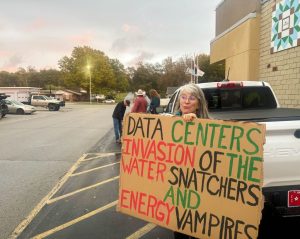
How Coweta Plans to Address Community Concerns
Public Hearings
The city will hold public hearings so residents can share concerns or express support. City staff will be available to answer questions about land use, infrastructure, and the conditions the city will impose on the developer.
Planning Commission Hearing
-
Date: January 19, 2025
-
Time: 6:00 p.m.
-
Location: ICTC Campus, 31850 OK-51, Coweta, OK 74429
-
Doors open: 5:30 p.m. for speaker sign-ups
-
Speaking limit: 3 minutes per person
City Council Hearing
-
Date: February 2, 2026
-
Time: 6:00 p.m.
-
Location: ICTC Campus, 31850 OK-51, Coweta
-
Doors open: 5:30 p.m.
-
Speaking limit: 3 minutes
Nationwide Data Center Issues Gain Momentum
Other data center projects across the U.S. have sparked new decisions, protests, rule changes, and legal pushes. Here are several developments:
Iowa
Iowa regulators approve plans for a $221 million, 61-mile transmission project to help supply power to two large data centers. (Des Moines Register)
Texas
ERCOT had 226 GW of large-load customers in its interconnection queue as of November — nearly quadruple the amount at the end of 2024, driven heavily by data center requests. (Latitude Media)
Michigan
Protests gain momentum against DTE Energy’s request for state approval of power supply contracts for a new $7 billion data center. (Planet Detroit)
Virginia
Regulators in Virginia authorize a separate “GS-5” rate category for large electricity customers, potentially becoming a national model as states grapple with data centers’ huge power needs. (Politico)
PJM Region
Independent power producers and PJM’s market monitor urge FERC to reject AEP’s proposal to sell off 750 MW in a capacity auction, arguing the utility is trying to offload capacity meant for data centers that didn’t materialize. (Utility Dive)
National Legal Push
Earthjustice and other advocacy groups consider challenges to data centers and the Trump administration’s orders to keep coal-fired power plants open. (E&E News)
Georgia
A $10 billion data center project backed by the Georgia lieutenant governor’s family could triple county water usage, but few details are publicly known. (Georgia Recorder)
Virginia (Policy Commentary)
An opinion writer argues Gov.-elect Abigail Spanberger can deliver on energy cost promises by making data centers pay more, expanding agriculture at rural solar farms, and relying on battery storage. (Virginia Mercury)
Then, there’s this from Utility Dive.
- U.S. data center power demand could reach 106 GW in 2035, BloombergNEF said Monday in one of the more aggressive load growth estimates to date. The U.S. had about 25 GW of operating data centers in 2024, Bloom Energy said earlier this year.
- BloombergNEF’s latest forecast is 36% higher than its previous prediction, released in April. The jump is due in part to the higher average size of the 150 significant U.S. data center projects announced in the past year, over a quarter of which are larger than 500 MW, BNEF said.
- The Energy Information Administration, which tracks demand for the federal government, generally only publishes detailed projections out two or three years, and few other analyses have attempted firm forecasts as far out as 2035.