
New Report Takes Aim at CWIP Laws, Calling Them a “Hidden Tax” on Power Bills
A new blistering report from the Manhattan Institute targets the growing use of CWIP — Construction Work in Progress — and takes the policy to the woodshed. The report argues that CWIP laws allow utilities to “gold plate” projects, stretch out construction timelines, and shift financial risk from investors to ratepayers.
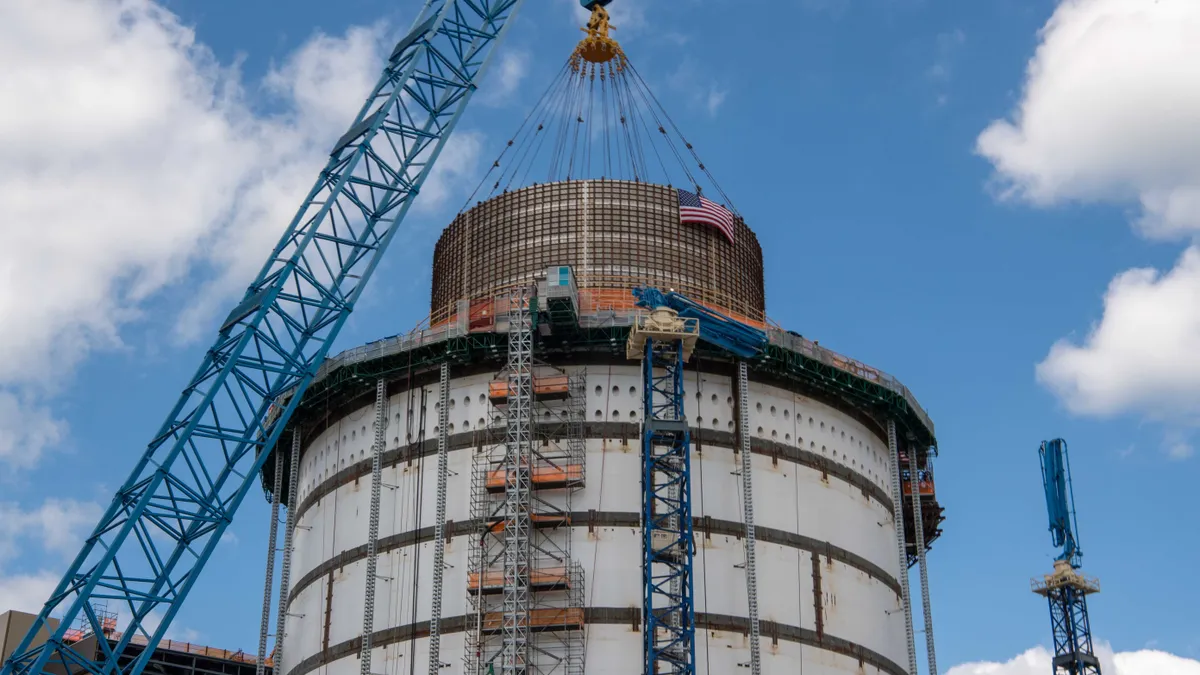
Three principal authors drafted the 38-page report, “The Hidden Tax on Your Power Bill,” and two of them work at the University of Tulsa — professors Eric Olson and Jason Walter. They joined a third author, professor Jack Dorminey of West Virginia University, in citing Georgia Power’s majority-owned expansion of the Vogtle nuclear power plant as a central example of how CWIP exposes customers to escalating costs.
Oklahoma Adopted CWIP This Year
Oklahoma adopted a CWIP law this year after lawmakers passed SB998, which became law without Gov. Kevin Stitt’s signature. Utilities have already attempted to use the law. Oklahoma Gas and Electric and Public Service Company of Oklahoma submitted early efforts to activate CWIP for upcoming projects.
The bill was authored by Rep. Trey Caldwell and Sen. Grant Green. Caldwell carried the water in the House and staunchly defended it, contending it would lower costs for utilities and ratepayers. However, he and his bill were also heavily criticized by Oklahoma Corporation Commissioners as the measure worked its way through the legislature.
At one point, Commission chairwoman Kim David, commented, “My concern about this all along is the constitutionality of it……it isn’t our job to make sure the utility company can make a profit.”
The Manhattan Institute’s report urges federal and state regulators — including the Oklahoma Corporation Commission — to rein in the use of CWIP to protect ratepayers from inflated costs tied to long-term energy construction.
Report Authors Issue Strong Warning
The report states:
“Under CWIP, utilities face little pressure to control costs or timelines because every additional dollar spent and every month of delay expands their rate base and increases their guaranteed returns. Cost overruns become profit opportunities rather than financial penalties.”
The report explains that CWIP allows utilities, with regulatory approval, to bill customers during construction, long before the project ever delivers electricity.
During debate earlier this year, one Oklahoma Corporation Commissioner warned that some elderly customers would never see a project completed before they died, yet they would still pay for it. Lawmakers also questioned the constitutionality of CWIP, though the law includes requirements that regulators review requests involving the use of natural gas.
Manhattan Institute Gives Policymakers Three Choices
The report outlines three policy paths:
-
End CWIP entirely, forcing utilities to use traditional debt/equity financing.
-
Allow CWIP only under strict budget caps established before construction, with no change orders.
-
Make CWIP’s rate of return performance-based, rewarding projects that finish on time and on budget while penalizing overruns.
The authors state:
“CWIP is the most influential energy policy term that never appears on a household utility bill.”
They note that CWIP does appear on a regulated company’s ledgers but still adds real dollars to what families pay every month.
How CWIP Changes Utility Financing
The report explains that ordinarily, major utility projects follow a standard business sequence: a company raises debt and equity, builds the facility, and begins earning revenue only after the facility becomes operational. Investors normally shoulder the risk of cost escalation, schedule delays, or lower-than-expected demand. Customers begin paying after they receive service.
CWIP reverses that process.
State commissions and FERC have allowed utilities to move CWIP into the rate base. The rate base forms the pool of assets on which utilities earn a guaranteed rate of return. Once CWIP enters the rate base, households no longer serve solely as consumers — they become financiers, covering the carrying costs of projects still under construction. The report argues that the policy was originally pitched as a solution to encourage construction, helping investor-owned utilities tackle expensive nuclear plants or extra-high-voltage lines. But in practice, CWIP has created inflated budgets through undisciplined spending, shifting risk from investors to ratepayers.
About the Authors

Eric Olson, Ph.D.
-
Associate professor of finance and associate professor in the School of Cyber Studies at the University of Tulsa
-
Holds a Ph.D. in economics from the University of Alabama
-
Published more than 37 academic articles
-
Work cited by The New York Times
-
Previously held positions at UCLA, Pepperdine University, and West Virginia University

Jason M. Walter, Ph.D.
-
Associate professor of economics at the University of Tulsa
-
Focuses on firm behavior, regulatory responses, strategic decision-making
-
Research includes streaming music, digital piracy, eco-labeled products, environmental policy, and regulatory oversight impacts

Dr. Jack Dorminey
-
Associate professor of accounting at West Virginia University
-
Former 20-year employee of the Federal Reserve Bank of Richmond
-
Holds a Ph.D. from Virginia Commonwealth University
-
Authored or coauthored 22 articles
-
Research interests include capital markets, pricing of risk, managerial systems
-
Teaching focuses on financial and managerial accounting topics
📌 MORE ENERGY NEWS
Stay updated on Oklahoma’s oil, gas, power, and regulatory developments at Oklahoma Energy Today.