
Endangered Species Protection Sought for New Mexico Flower Threatened by Fossil Fuel Industry
Oklahoma oil and gas drillers and others active in the Permian Basin of west Texas and southeast New Mexico could soon face another regulatory challenge if a national environmental nonprofit succeeds in its latest legal push.
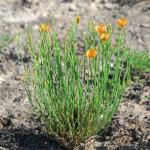
The Center for Biological Diversity has formally petitioned the U.S. Fish and Wildlife Service to protect Allred’s flax under the Endangered Species Act. This rare flowering plant exists only within limited areas of the Permian Basin, placing it directly inside one of the most active oil and gas production regions in North America. Much of the plant’s known and potential habitat overlaps with oil and gas leases that are already being drilled or could be developed in the future.
“These beautiful orange flowers grow only on scattered gypsum outcrops in one of the most biodiverse deserts on Earth and they urgently need protection,” said Krista Kemppinen, Ph.D., a senior scientist at the Center. “Exploration and extraction of oil and gas resources could wipe these flowers out unless they’re protected under the Endangered Species Act.”
Oil and Gas Development Cited as a Direct Threat
The Center argues that oil and gas development may lead to habitat loss and degradation for Allred’s flax through:
-
Well construction and related infrastructure
-
Dust from new or existing roads
-
The spread of invasive plant species
Each of those factors, the group contends, threatens the plant’s ability to survive and reproduce successfully in its narrow desert environment.
The organization also pointed to livestock grazing, mining activity, and climate change as additional pressures on the species. The Center stressed that future temperatures and prolonged drought conditions could exceed what the otherwise hardy desert plant can tolerate.
A Plant With Unusually Narrow Survival Conditions
Allred’s flax is described as a perennial plant capable of reproducing asexually, but its survival depends on highly specific geological conditions. Scientists limit the species to the northern Chihuahuan Desert, where it grows only on scattered gypsum outcrops.
The plant also stands out among North America’s Linum species because of its highly specialized habitat needs, which significantly increase its vulnerability to land disturbance from drilling, road construction and industrial development.
Other Permian Basin Species Already Under Pressure
The petition for Allred’s flax follows similar environmental efforts targeting wildlife across oil-producing regions. Other Permian Basin species threatened by oil and gas development include the Dunes sagebrush lizard, the Texas hornshell, the Gypsum wild-buckwheat and Tharp’s bluestar.
If federal regulators grant the petition, the Endangered Species Act designation could trigger new land-use restrictions, permit delays and additional compliance requirements for producers operating across the Permian Basin — including those with direct economic ties to Oklahoma.
The U.S. Fish and Wildlife Service must now review the petition and determine whether the species warrants formal federal protection.