

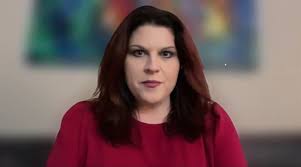
Questions, questions and more questions. More transparency. It’s what freshman Oklahoma legislator, Rep. Amanda Clinton of Tulsa wants as she focuses on the state’s burgeoning data center industry.
“So, I just think before we roll over and let these data centers come into our communities, we deserve to know who they are and examine their track record as a good community partner and a good neighbor. And if they’re not a good neighbor, I don’t want them,” stated Clinton in an interview with Scott Mitchell for OK Energy Today.

The latest Representative chosen to the state House, she won the June 2025 election in which a successor to Amanda Swope was chosen for the 71st district of the Oklahoma House of Representatives. Clinton was sworn into office in June but has yet to serve during a legislative session. Despite that fact, she hosted a legislative interim study in October, explaining, ““Data centers are an increasingly significant part of Oklahoma’s economy and infrastructure. But as this industry experiences unprecedented growth, it is also poorly understood by many.”
Clinton became interested in data centers after seeing headlines in her district about potential data centers in Tulsa. She initially expressed great concerns about the amount of water needed to cool the large hyperscale centers, the large operations. Those concerns have eased for the new legislator.
“As I learned more, I think I became less concerned about water, mostly due to different technologies that are available that don’t require as much water to cool the servers in these data centers, and I became more concerned about electricity and how we just do not have the capacity yet to onboard all these projects that have been proposed,” she told Mitchell.

“I think if a data center is proposing to use water, it’s not quite
the red alarm I thought it was in the beginning because of new technology, but also because I think we’re okay for now on surface water. But now, if companies start saying they’re going to use groundwater, tapping into the aquifers, I think that is very dangerous, and I would not suggest that any community proceed with a project that’s going to tap groundwater.”
Rep. Clinton still believes, residents near proposed data centers need to ask where’s the water coming from? Do we have enough? How much is too much? How many data centers might be too much of a strain on groundwater and endanger our drinking water?
“So, those are just questions that I think communities need to ask, and they deserve the answers to. And that’s what I’m out to find is just, you know, answers for folks and transparency,” she added.
But there remain some potentially serious issues that Rep. Clinton believes should get more attention as city after city in the state deals with the potential construction of a data center. Water is also the same issue raised by cities throughout the nation as they too deal with the rapid growth and spread of AI.
“In the water issue, I don’t know that I feel comfortable with the level of transparency because it has taken a lot of time for me to figure out these questions on my own. I think that the answer should be more forthcoming from our municipal utility boards, from the data center developers themselves. And so, no, I wouldn’t say I’m satisfied with the transparency because, again, I’m a legislator. I’m being paid to get out there and find the answers to these questions. But if you’re just an average person that, you know, you work all day, you come home, you’re you don’t have the time nor the energy to go out and seek these answers on your own. I believe that data center developers and municipal utility boards need to be more forthcoming about the water issue.”
Water is not the only important aspect to be considered when it comes to data center growth. What about the impact on electrical rates for consumers? It’s a topic raised by utilities as they deal with the need for more electrical power and more generation abilities. Rep. Clinton isn’t willing to accept that it should be borne by residential ratepayers.
“So that right there tells you that the desire to build out the grid will be passed on to consumers. And people need to be very much aware of that. Now, there has been a lot of talk recently about behind-the-meter legislation. That was passed last legislative session. I was not there. Remember, I’m new. But nothing about that legislation requires data centers to build behind the meter. You know, they are not required to do that. It is completely optional. I assume that might be an attractive option for them if they feel like they can get that power quicker. But then if the data centers are going to build behind the meter their own power generation, I worry a little bit about building out the infrastructure on our own grid here with our own utilities. Are we going to overbuild in anticipation that these companies will need all this power? And then maybe perhaps they will not.”

Transparency, not just by the data center developers but state agencies, is a prime target for Rep. Clinton. She says the Corporation Commission should be put in that category, especially when it comes to use of certain terms, such as “large loads.”
“Is a large load customer 30 megawatts? Is it 50? You know, we don’t have a definition of that, and that’s one of the things that has kind of surprised me as I’ve been looking at different statutes is just how few things are defined in statute. And in my opinion, you can’t legislate something that you have not yet defined. So, I’ll be looking at possibly creating some different definitions, asking for more transparency and things along those lines. So, what I would like to do is create a definition of what is a hyperscale data center, and then a directory of where they are, how much water they use, how much energy they use, and, you know, who runs them. I think that’s not asking too much for Oklahomans.”
Clinton believes there should be more state leadership on the important decisions when it comes to the creation of new data centers. She says what’s happened is the decisions are “being made very, very local” and not at the state level.
“So we have city managers and city counselors and mayors who are making these decisions. And I do worry a little bit that some of these rural and suburban communities may not have the professional staff necessary to take a deep dive into these projects. And that is not a knock on anyone who is a public servant in a rural or suburban community. I think they’re doing all they
can, but these are massive projects.”
She believes some of the communities lack the resources needed to make intelligent decisions.
“So maybe it’s a matter of bringing resources to local communities so that they can vet these projects more, be more transparent with their citizens. And so that’s really truly what I’m looking out for is transparency, because we cannot make good decisions unless we know all the facts.”
Click here for video of Mitchell’s interview.
Below is the script of Scott Mitchell’s interview with Rep. Clinton.
Okay, my guest is Representative Amanda Clinton. Good to have you today.
Hi Scott, thanks for having me. I’m so good, thank you for having me.
There’s nobody that has, well first off you haven’t served one single day in session, okay, and it starts in February because you were elected this year, was it last year?
Well after the session. It was in June, yeah June, yeah right after session, yeah. It’s been a long year, Representative Clinton. Anyway, and so you have been working on our favorite, favorite subject, Jerry and mine, data centers, and nobody’s helping you. This is something you came in, you were hearing from people on the doorstep. Let’s start with, first off, congratulations on being a member of the legislature in your election, and what got you interested in this particular topic?
Yeah, thanks for having me Scott, I appreciate it, and you know this wasn’t something necessarily that I was hearing on the
doorsteps. It was actually a news article that caught my eye about a year ago, and it was in regard to Project Anthem, which is a project considered for East Tulsa, a data center out there, and what caught my eye was the amount of water they were requesting, which was, you know, over two million gallons of water a day, I believe, and I just thought to myself, that sounds like a lot. You know, I grew up in eastern Oklahoma where we love our water, we love our fresh, cold, cool springs, and you know, I grew up on a farm where we had livestock, I grew up on well water, so water has been something that’s been very important to me in my lifetime, and also as a Cherokee Nation citizen, and so the amount of water is what initially caught my eye, and it’s just something that I wanted to learn more about, and so I wouldn’t say I was necessarily hearing about this on the doorsteps when I was talking to folks.
It’s actually something I was informing people about, and as I would tell them, you know, I’m really concerned about the influx of data centers into Oklahoma because of the amount of water they use, and it really sort of lit people up, so this is not something that any sort of industry is driving me to ask about, or I don’t have any partners in this. As you said, I don’t even know most of my colleagues, quite frankly, because I was only elected in June, so I’ve probably met 10 of my colleagues outside of the Democrats that I already knew, so yeah, this is just something that I am talking about because I think it’s important, and so that’s what brought me here at this point, and as I began learning more, I introduced an interim study. Those interim study proposals were due about a week after I was sworn in, and I knew I wanted to do
something around data centers.
You went fast.
I did. I just jumped right in, and I wanted to study the impact on our water quality and quantity, the economic development, and then also the impact to our electric grid and what that does for rate payers, and I will say that I immediately, of course, was concerned about water, but as I learned more, I think I became less concerned about water, mostly due to different technologies that are available that don’t require as much water to cool the servers in these data centers, and I became more concerned about electricity and how we just do not have the capacity yet to onboard all these projects that have been proposed.
Your concerns about water, have your fears been somewhat eased by the tech that’s out there and what you’ve heard?
Yes, they have, actually. So, for a couple of reasons, there are, and if people don’t understand why data centers need water, it’s to cool the servers. They get very, very hot, and so as I, and I’ve spoken to data center developers. I’ve talked to people all across this industry, not just people who have voice concerns, but
people who actually have some answers, and so, you know, what I have been told, and I even toured a company at Broken Arrow that makes heat exchangers for data centers, and they showed us the different kinds of heat exchangers that actually, you know, they take air cooling, or you can do cooling on a closed loop with even wastewater. Antifreeze is an option, and I asked things like, well, I assume antifreeze can’t be in there for infinity. How do you dispose of it? And they said just like anyone would dispose of antifreeze from any, you know, industrial site, and I was like, okay.
So, partly because of the technology, and then also I’ve spoken to people in the water world out here about the source of the water. Tulsa, of course, gets our water from Lake Spavina, which is
primarily surface water, which is runoff from rain streams, confluence of streams, you know, even starting up out of state. So, I think if a data center is proposing to use water, it’s not quite
the red alarm I thought it was in the beginning because of new technology, but also because I think we’re okay for now on surface water. But now, if companies start saying they’re going to use groundwater, tapping into the aquifers, I think that is very dangerous, and I would not suggest that any community proceed with a project that’s going to tap groundwater.
So, I think people need to ask, where’s the water coming from? Do we have enough? How much is too much? How many data centers might be too much of a strain on groundwater and endanger our drinking water? So, those are just questions that I think communities need to ask, and they deserve the answers to. And that’s what I’m out to find is just, you know, answers for folks and transparency.
Do you feel comfortable with the level of transparency in the water issue?
In the water issue, I don’t know that I feel comfortable with the level of transparency because it has taken a lot of time for me to figure out these questions on my own. I think that the answer should be more forthcoming from our municipal utility boards, from the data center developers themselves. And so, no, I wouldn’t say I’m satisfied with the transparency because, again, I’m a legislator. I’m being paid to get out there and find the answers to these questions. But if you’re just an average person that, you know, you work all day, you come home, you’re you don’t have the time nor the energy to go out and seek these answers on your own. I believe that data center developers and municipal utility boards need to be more forthcoming about the water issue.
Moving from that was your majority of concern, but you’ve gone to a 50-50. Now, I doubt that anybody is happy with the rest of the transparency around the process. I mean, that’s certainly something we’ve seen. Jerry and I each week talk, we see stories, some of which are just straight-up disinformation. Some of it’s we don’t understand. Some of it is we need more information.
As we’re going forward and you see that, you know, stories like 10 percent of U.S. power usage, you know, in the next few years could be just the data centers. And people in Oklahoma still paying that premium from winter storm 2021. People are scared to death about this. So since the electricity concern has risen for you, help us wrap our arms or if you would wrap your arms around what we need to know.
Yeah, I think that people, like I said, you mentioned because we spoke earlier that, you know, my concerns when I first started looking into all this was about 80 percent water and about 20 percent electricity. It’s about 50-50 now. And so I think that consumers need to understand that, you know, some of our utility
companies have applied for a rate increase. They’ve requested a rate increase from Oklahoma Corporation Commission. And they have cited in their own testimony that that is driven largely
by data centers and new industrial projects coming on. PSO in particular told the Corporation Commission that the largest customer in the history and most of the history of their company required 130 megawatts to operate. They currently have a
letter of agreement with a company that needs 1,000 megawatts. They also have 11 letters of agreement with companies that need 50 megawatts or more. In that same filing, they note that, you know, the excess power that we need to be part of the Southwest Power Pool, we will be deficient in the Southwest Power Pool in about a year. And in five years or so, we might be as much as 3,000 to 3,300 megawatts deficient. And so, again, PSO is making this case asking for a rate increase.
So that right there tells you that the desire to build out the grid will be passed on to consumers. And people need to be very much aware of that. Now, there has been a lot of talk recently about behind-the-meter legislation. That was passed last legislative session. I was not there. Remember, I’m new. But nothing about that legislation requires data centers to build behind the meter. You know, they are not required to do that. It is completely optional. I assume that might be an attractive option for them if they feel like they can get that power quicker. But then if the data centers are going to build behind the meter their own power generation, I worry a little bit about building out the infrastructure on our own grid here with
our own utilities. Are we going to overbuild in anticipation that these companies will need all this power? And then maybe perhaps they will not.
And so, that’s, I think, a concern that everybody should be on top of. And also, just the whole nature of technology is to always become more efficient, right? That’s the whole goal of AI is to
be more efficient. So part of me wonders if eventually these large facilities will not need this much electricity.
But yet, we have built out all this infrastructure that maybe in the future the corporation commission says, yes, PSO, OG&E, you can pass this cost off to customers. Then are we just footing the bill for a bunch of electricity that we didn’t ask for and we don’t need? You know, consumers like you and I, we are getting more efficient every single day when we buy energy efficient refrigerators, washers and dryers, dishwashers. All of those things mean that
households, regular households like yours and mine are actually using less electricity. So, we’re not asking for more electricity. It’s these large tech companies and large industrial projects that are asking for more electricity, and I think they should have to foot the bill.
So, you’re basically talking about a bubble. And, you know, there’s this great conversation right now about are we going to have a chip bubble? And, you know, where’s the profitability from the chip industry? People are going, look at all this CapEx. When are they going to get the money back, right? And so, you’ve raised the
possibility of a grid type of bubble. Where do you want to go next with this, Representative?
So, I’ll be entering my first session, and I mostly want to, you know, request more transparency around these projects. You know, whenever, you know, the Department of Commerce was greatly helpful in my interim study by providing me as much information as they possibly could, unfortunately, I asked them how many data centers do we have in Oklahoma, and they said they didn’t know.
And that’s because the federal NAICS code for data centers is the same as web development, cloud computing, other types of web services. So, it’s really difficult to extrapolate that data out. So, what I would like to do is create a definition of what is a hyperscale data center, and then a directory of where they are, how much water they use, how much energy they use, and, you
know, who runs them. I think that’s not asking too much for Oklahomans. It’s just saying, like, where are these things? In addition to that, I would like a little more transparency earlier in the process, as companies and developers are going out to get tax incentives from different counties and municipalities.
I think before you get a new neighbor that is as large as these complexes are, I think you should deserve to know who those neighbors are. Now, for example, Google has been very good to Pryor. I’m originally from Mace County. I’m very familiar with Google. They’ve been great to Pryor. So, I want to know that are we going to get a good neighbor like Google has been in Pryor, or are we going to get someone who’s not been very neighborly, like what Elon Musk’s Grok has done in Memphis, which has poisoned a lot of people with gas turbines. So, I just think before we roll over and let these data centers come into our communities, we
deserve to know who they are and examine their track record as a good community partner and a good neighbor. And if they’re not a good neighbor, I don’t want them. So, just more transparency earlier in the process, and then also possibly asking the Corporation Commission to define what is a large load customer.
Is a large load customer 30 megawatts? Is it 50? You know, we don’t have a definition of that, and that’s one of the things that has kind of surprised me as I’ve been looking at different statutes is just how few things are defined in statute. And in my opinion, you can’t legislate something that you have not yet defined. So, I’ll be looking at possibly creating some different definitions, asking for more transparency and things along those lines.
I share your concern, but when you ask the question, where are these? What’s going on? You know, I hate for expanding government, and a lot of people in Oklahoma don’t want to do that, but there really needs to be a hub so people can get answers. And Jerry and I have seen this for the last year. In the absence of information, you know what springs up.
Absolutely. Absolutely. And so, that’s really what I’m talking about is not regulation, not adding to government, simply a directory.
You know, do we know where these are? How much electricity they’re using? How much water they’re using? And Scott, as you well know, my job for the last 25 years has been communications and community relations. And based on my experience, my couple of decades now in communicating and working with communities, I can confidently say that the data center developers have done a terrible job at both. Their community relations and their
communications has been terrible.
And as you mentioned, in the absence of communication and good information, people are going to make up things and, you know, your imagination is going to run wild. So, you know, it’s really difficult to separate fact from fiction. And so, that’s what I’m trying to do is just bring more transparency to this process and reliable, verified information so that communities can make the best decisions for themselves.
Final thoughts as to people are going to be seeing this and the interest is, Jerry and I have watched this for some time, where a year ago there was no interest in this. They were talking about… Well, I was interested a year ago.
Yeah.
But generally in the media, it was not happening.
Yeah. Correct. Yeah. And so, it is, especially when we started seeing the CapEx build out then, over from the financial pages into general conversations. And a lot of the stuff representative that’s happened comes from the sensational stuff that’s just low information and not true. But I understand it. I mean, people are fearful about that this is moving. Absolutely.
Yeah. They’ve seen what’s happened to their electricity bills. In the national level, there’s debates about AI and who regulates it.
It’s so much so fast. It’s hard to get your arms around it. Last thoughts as to where you want to head. What we should be looking for is consumers in the next… There’s a few weeks left in December. You all will be joining in January. People still don’t understand. Legislators start working in January, big time. And what do you see the next six weeks happening?
Well, one, I’m super excited to meet my new colleagues. Like I said, I have not met most of the House of Representatives. I know some, but not all. So I’m excited to meet my new colleagues. But I would also say that communities need to know these decisions are being made very, very local. They are not being made at the state level. They are being made at the county level, at the
municipal level. So we have city managers and city counselors and mayors who are making these decisions. And I do worry a little bit that some of these rural and suburban communities may not have the professional staff necessary to take a deep dive into these projects. And that is not a knock on anyone who is a public servant in a rural or suburban community. I think they’re doing all they
can, but these are massive projects. And I assume that they don’t have very large staffs. And it’s usually a volunteer position or
there’s a stipend. So these people are also doing day jobs. I’m not sure that our local communities have the resources that they need. So maybe it’s a matter of bringing resources to local communities so that they can vet these projects more, be
more transparent with their citizens. And so that’s really truly what I’m looking out for is transparency, because we cannot make good decisions unless we know all the facts.
Representative Amanda Clinton is brand new at this, but she’s a pro’s pro. And folks that don’t know her yet, you’re going to.
Oh, that’s nice.
Thank you. Thanks so very much for joining us.
Thank you, Scott. I appreciate you having me on.