

Coalition Demands Air Monitoring, Health Protections After Artesia Refinery Explosion
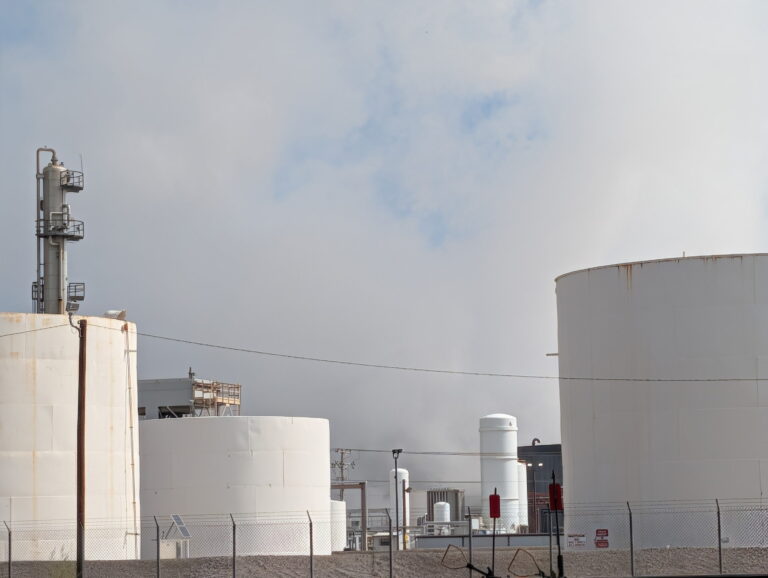
The HF Sinclair refinery explosion in Artesia continues to spark intense concern across southeastern New Mexico, as community groups demand immediate action from state regulators. In the days following the Oct. 31 blast, which injured three workers and shook nearby neighborhoods, the Permian Basin Climate Justice Coalition (PBCJC) urged the New Mexico Environment Department (NMED) to implement stronger, independent air-quality monitoring and expanded health protections for residents.
Artesia sits between Roswell to the north and Carlsbad to the south, less than 100 miles from the Texas border, with the mountains near Cloudcroft and Ruidoso rising to the west. The explosion alarmed residents throughout the region and reinvigorated long-running concerns about refinery emissions and oversight gaps.
Coalition Says Communities Need “Real-Time Truth”
“Families in Artesia deserve to know what’s in the air they’re breathing – not days later, not filtered through corporate PR, but in real time,” said Charlie Barrett, thermographer for Oilfield Witness and a representative of the PBCJC.
Barrett explained that after nearly four years of documenting refinery emissions through optical gas imaging at the HF Sinclair Navajo Refinery, he filed evidence-based complaints that never received a response from state regulators. He argued that the Oct. 31 explosion shows the consequences of allowing industry “to privatize profits and socialize harm to the community.”
Coalition Issues Formal Demands to NMED
In a letter sent to NMED Secretary James Kenney, the coalition urged the state to:
• Install a permanent, state-operated air monitor in Artesia
• Provide real-time, publicly accessible air-quality data
• Develop clear public-health guidance for industrial emergencies
• Hold a public meeting in Artesia within 30 days
• Deploy the promised mobile air-monitoring unit in the Permian Basin
The pressure comes as NMED’s 2024 Air Monitoring Network Review confirms the state operates only 20 monitoring sites, and just two cover the Permian Basin — both far from the Artesia refinery and unable to capture emissions affecting local neighborhoods.
Health Advocates Cite Widespread Industry Leaks and Releases
“Our coalition has documented countless spills, leaks, and releases across the Permian. When something like this happens, people deserve truth and transparency,” said Melissa Troutman, Climate & Health Advocate for WildEarth Guardians.
She emphasized that peer-reviewed studies now show significant health risks for people living near oilfields, especially children, seniors, and medically vulnerable populations. That reality drives the coalition’s argument that air monitoring must not be optional in refinery-adjacent communities.
Coalition Warns of a “National Sacrifice Zone”
The PBCJC represents more than 20 environmental, health, and community organizations. Its platform calls for stronger enforcement, long-term public health protections, and a “just transition” for communities affected by refinery operations, fracking, and heavy industrial activity in the region.
“If industry pollutes it, the state must monitor it. No family should have to wonder if it’s safe for their children to breathe,” the coalition wrote.
📌 MORE ENERGY NEWS