
AccuWeather Forecasts Intense Winter Storms Across U.S.
Winter Outlook from AccuWeather Experts
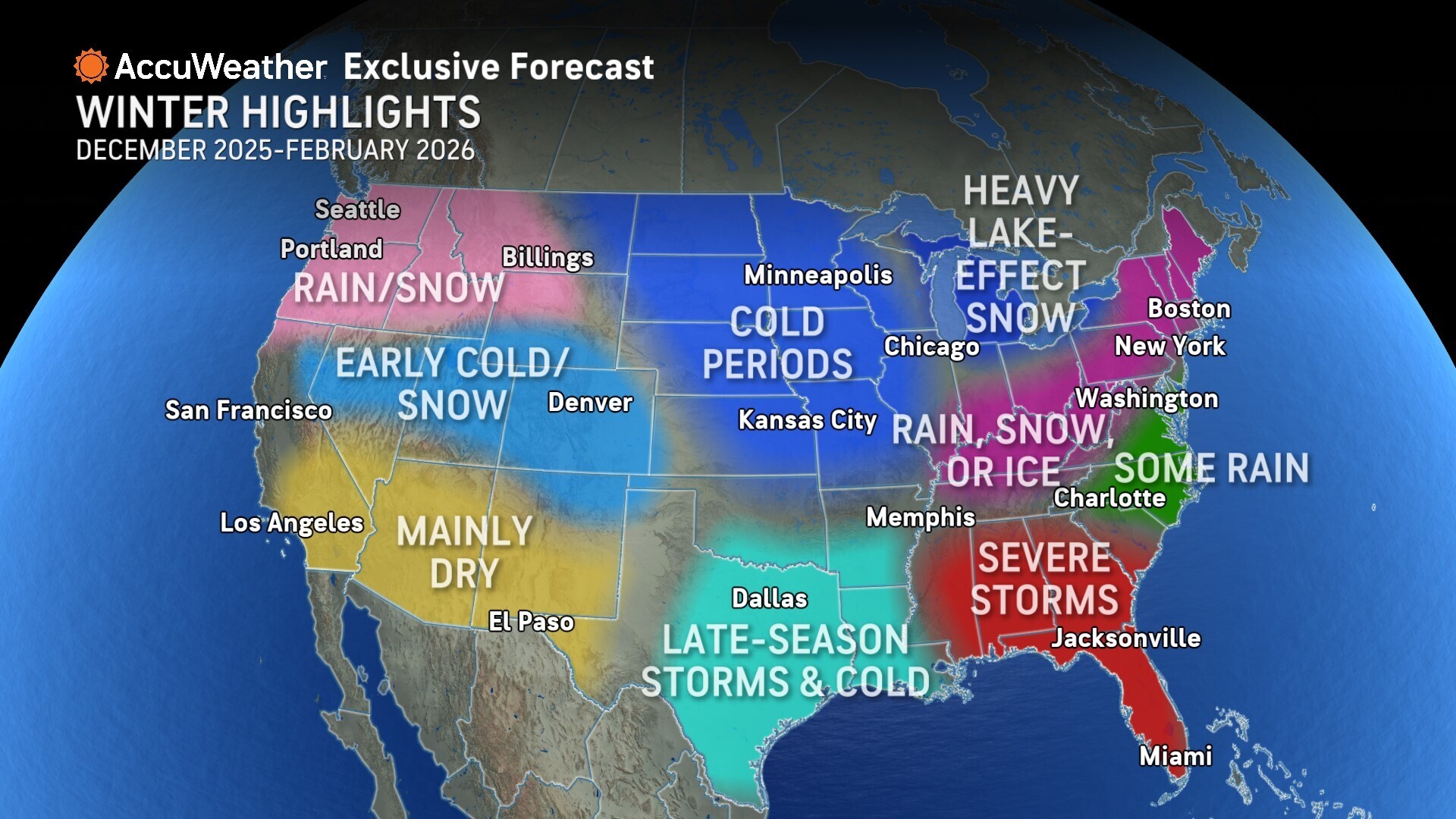
It’s not the Farmer’s Almanac, but AccuWeather’s 2025–2026 U.S. Winter Forecast signals a stormy season ahead. The long-range outlook, released by meteorologist Paul Pastelok and his team, calls for a “bookend winter” across the Midwest, Great Lakes, Ohio Valley, and Northeast.
“It looks to be an intense and stormy winter for certain areas of the country, particularly across the Midwest, Great Lakes, Ohio Valley, Northeast, and parts of the mid-Atlantic,” Pastelok said in a press release.
Oklahoma might not be hit as hard, but the state sits close enough to feel some spillover effects from Arctic blasts that track south.
-
Key Forecast Highlights
Storms and Snowfall
-
Early season storms will roll out of Canada into the Midwest, later shifting toward the Appalachians and New England.
-
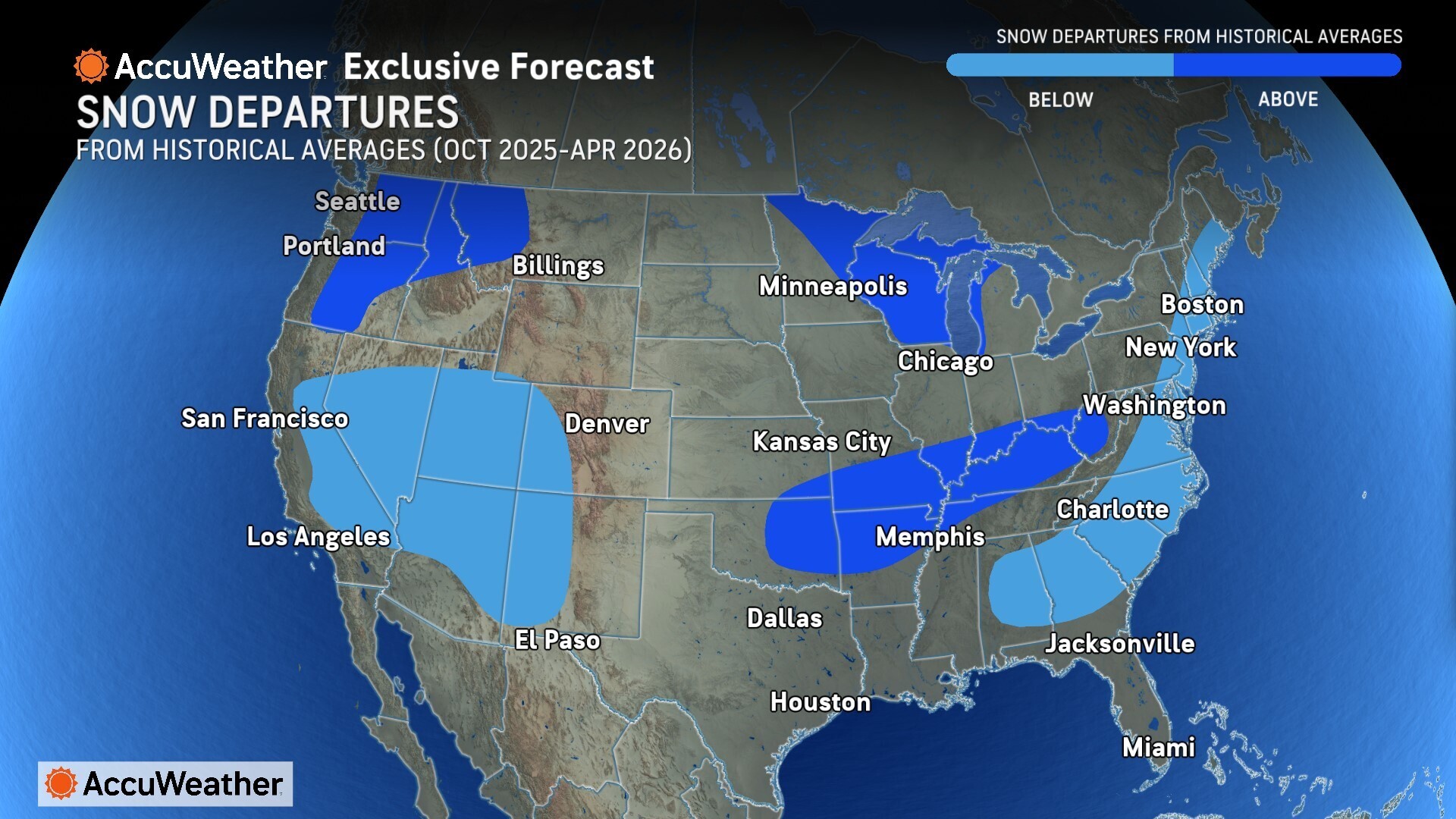
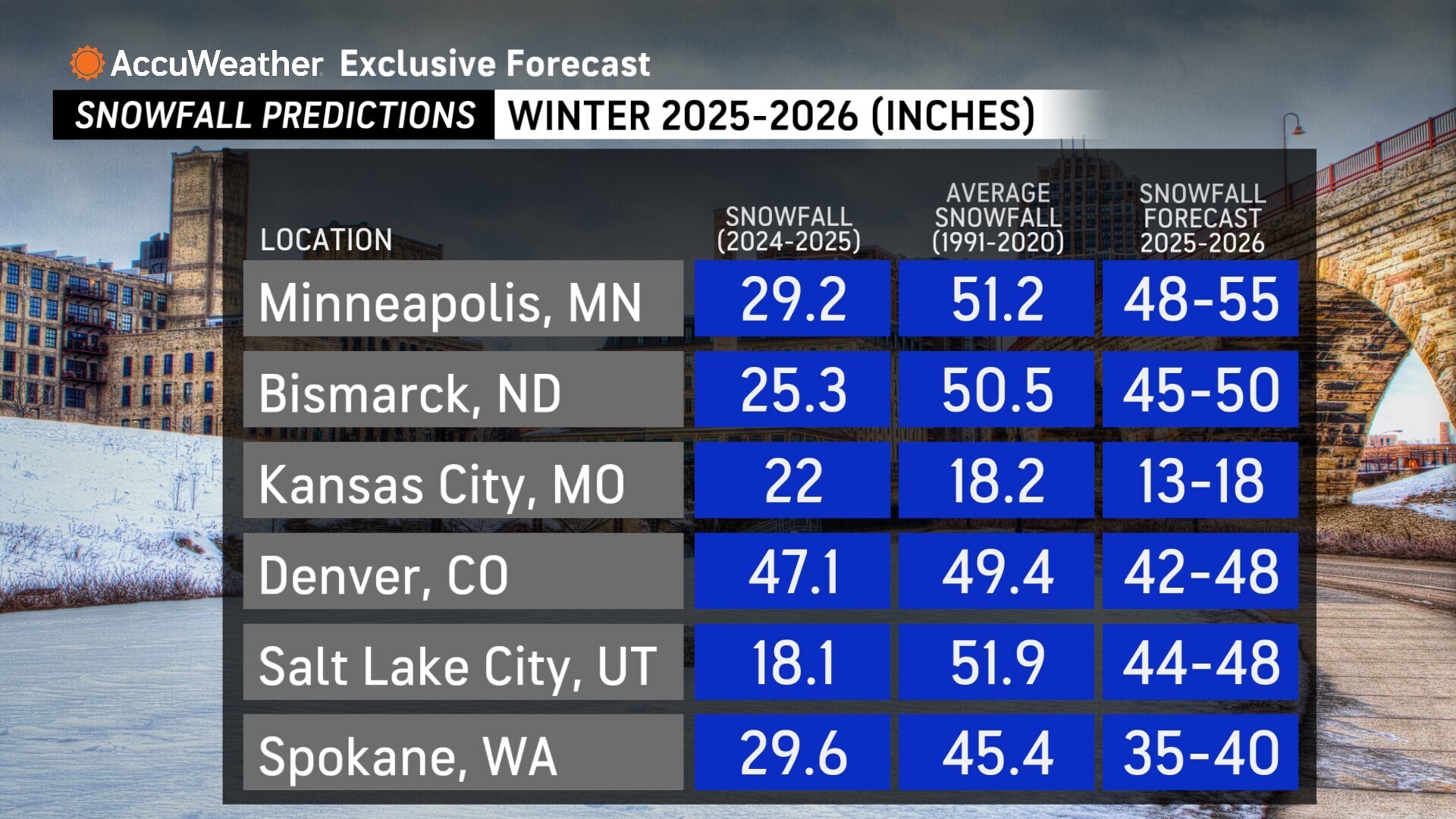
Northeast cities like New York, Boston, and Philadelphia are likely to see heavier snow totals compared to last winter.
-
Great Lakes region could experience heavy lake-effect snow in December, with Buffalo projected to receive 90–100 inches.
-

Cold Air Patterns
-
Upper Midwest and Plains—including Kansas City, Minneapolis, and Chicago suburbs—could endure the coldest air of the season.
-
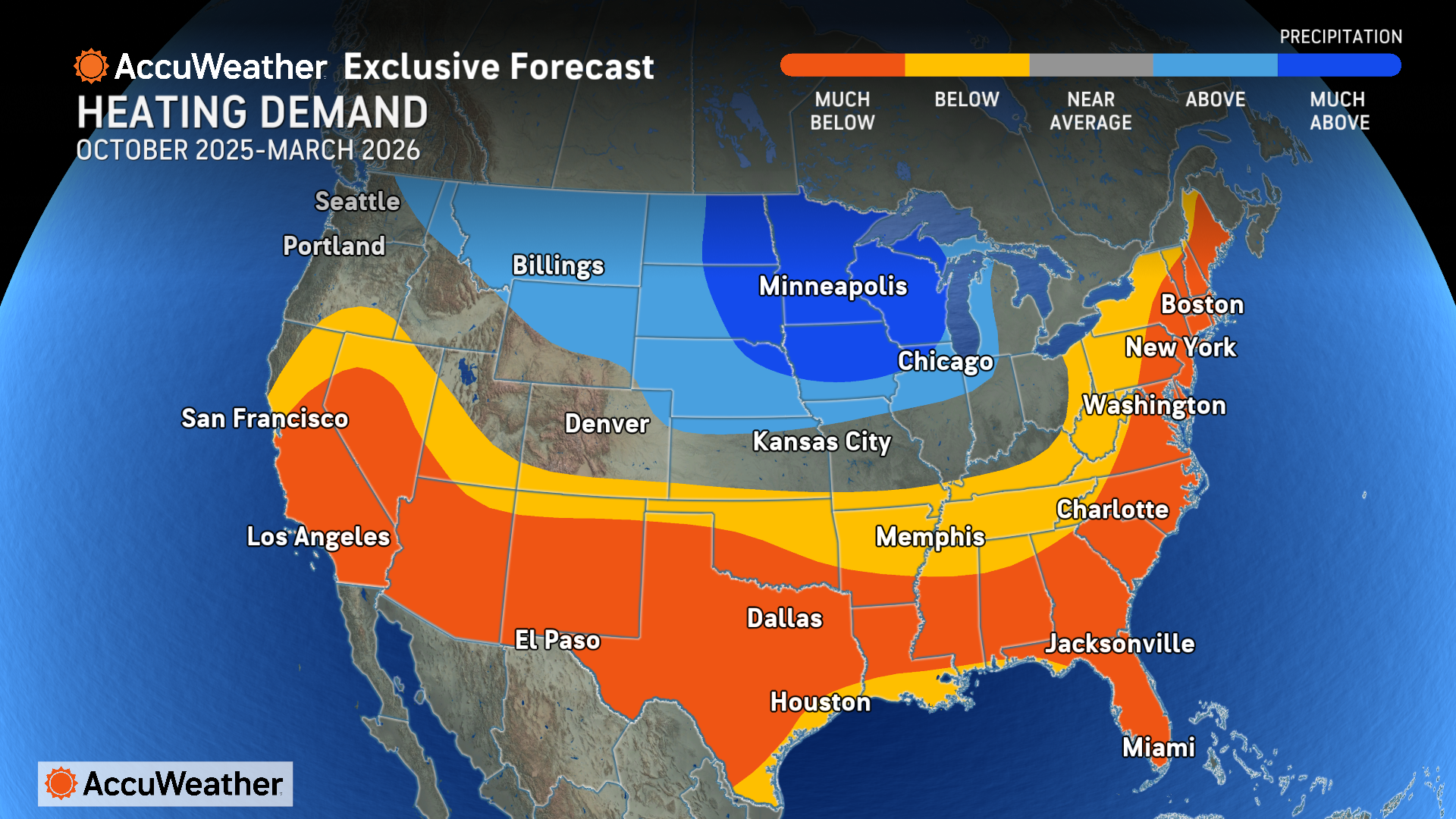
Heating demand in these regions will climb well above average, pushing winter utility bills higher.
-
Oklahoma and the southern states may dodge the worst, but a polar vortex shift in late January or February could send Arctic air deep into Texas and the Gulf Coast.
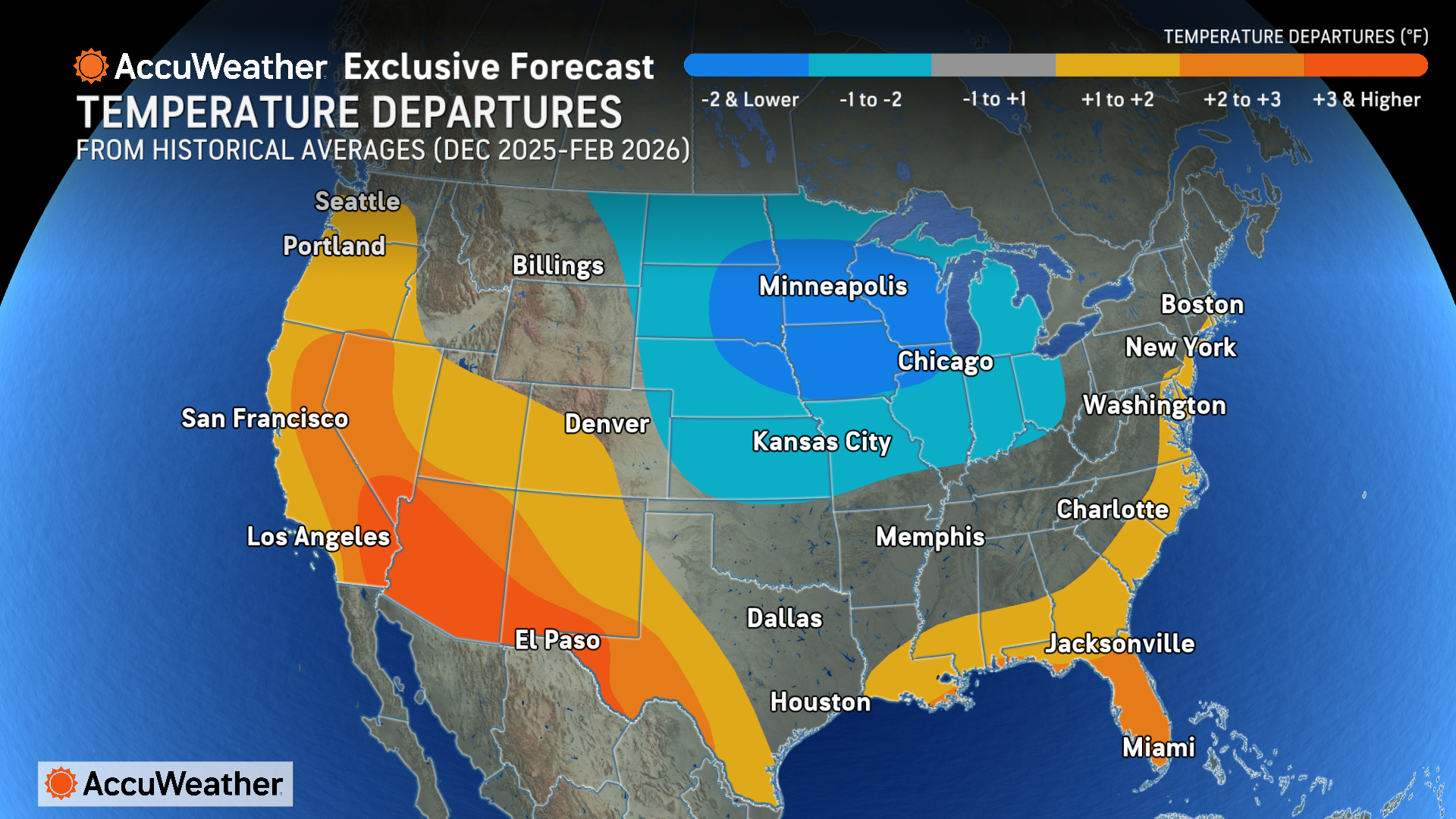
Energy and Heating Impacts
AccuWeather warns that heating bills could rise, especially where colder-than-average air settles. Even in regions where heating demand is below normal, higher energy prices may still push bills upward. Natural gas utilities are expected to see increased strain during peak cold spells.
The forecast also ties western weather patterns to a marine heat wave in the northern Pacific Ocean, which could keep temperatures warmer and precipitation lower across the Northwest.
Meteorological winter begins December 1, with astronomical winter starting on the solstice, December 21 at 10:03 a.m. EST.
📌 MORE ENERGY NEWS
Source: AccuWeather press release | Edited for clarity by Oklahoma Energy Today