

An interesting fact about the nation’s oil production…93% of it comes from just 10 counties in west Texas and southeast New Mexico.
Those 10 counties are in the shale oil rich Permian Basin, a zone where several Oklahoma oil and gas companies are active in production and transportation.
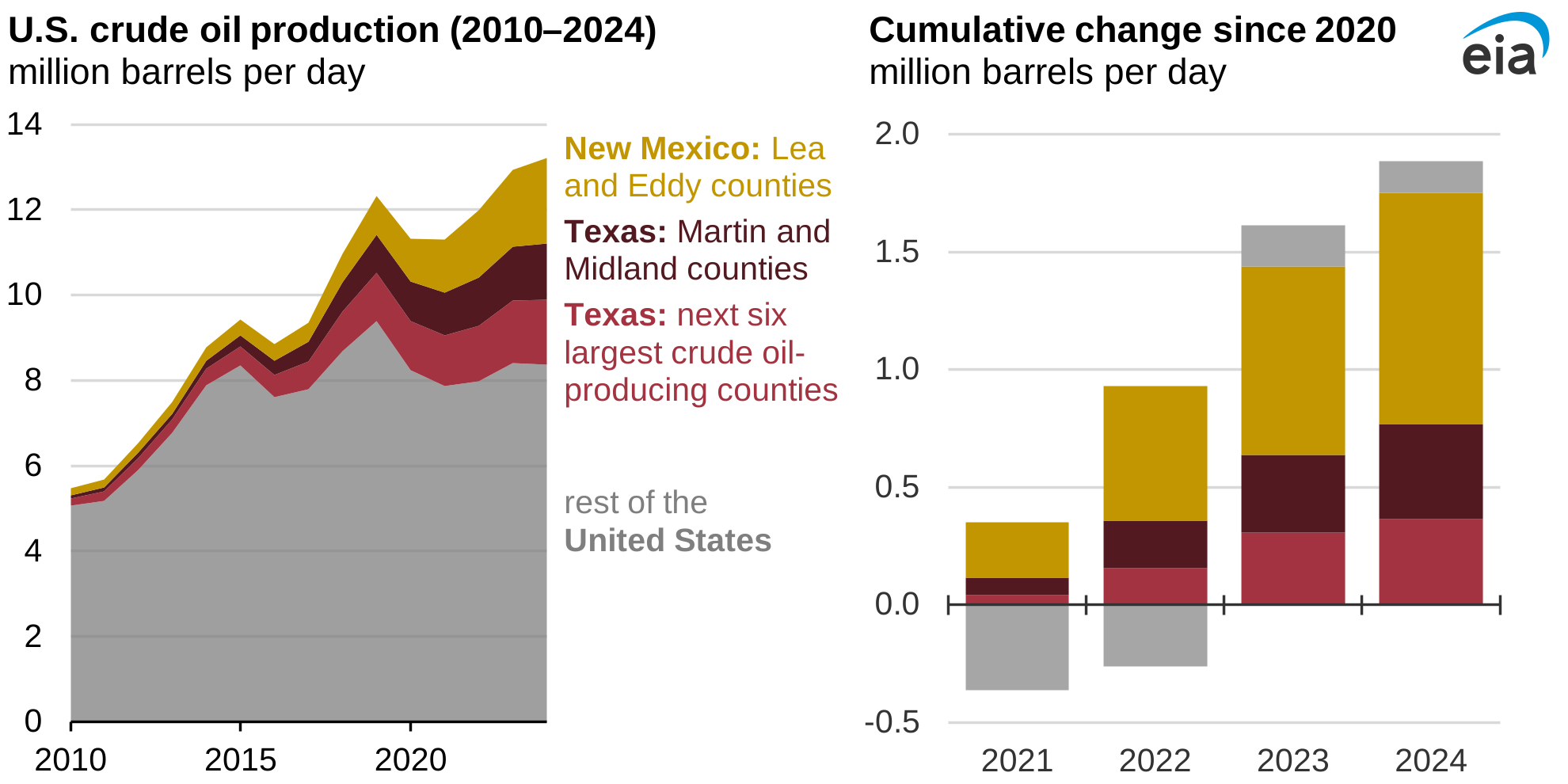
The 10-county report comes from the U.S. Energy Information administration which reported that between 2020 and 2024, total crude oil and lease condensate production in the United States grew by 1.9 million barrels per day (b/d), 93% of which was produced from just 10 counties in Texas and New Mexico. Production from the rest of the United States, including producing areas in offshore state or federal waters, grew by just 130,000 b/d.
The 10 counties are all within the Permian Basin, a large geologic feature underlying 66 counties in New Mexico and Texas. Two of these counties, Lea and Eddy in New Mexico, accounted for nearly 1.0 million b/d of U.S. production growth (52%) between 2020 and 2024. Martin and Midland in Texas accounted for an additional 0.40 million b/d (21%). Six additional counties in Texas—Andrews, Glasscock, Howard, Loving, Reagan, and Ward—together grew by 0.36 million b/d (19%), based on county-level production data from Enverus.
Crude oil and lease condensate production in these 10 counties averaged 4.8 million b/d in 2024, 37% of the U.S. total. Within these 10 counties, the primary geologic units responsible for this growth are the Bone Spring, Spraberry, and Wolfcamp formations.
These geologic units have been the main sources of oil production growth across the Permian Basin and the United States at large since 2020. Crude oil and natural gas production from U.S. tight oil and shale gas formations can be found in Table 10b in the Short-Term Energy Outlook.
Source: EIA